
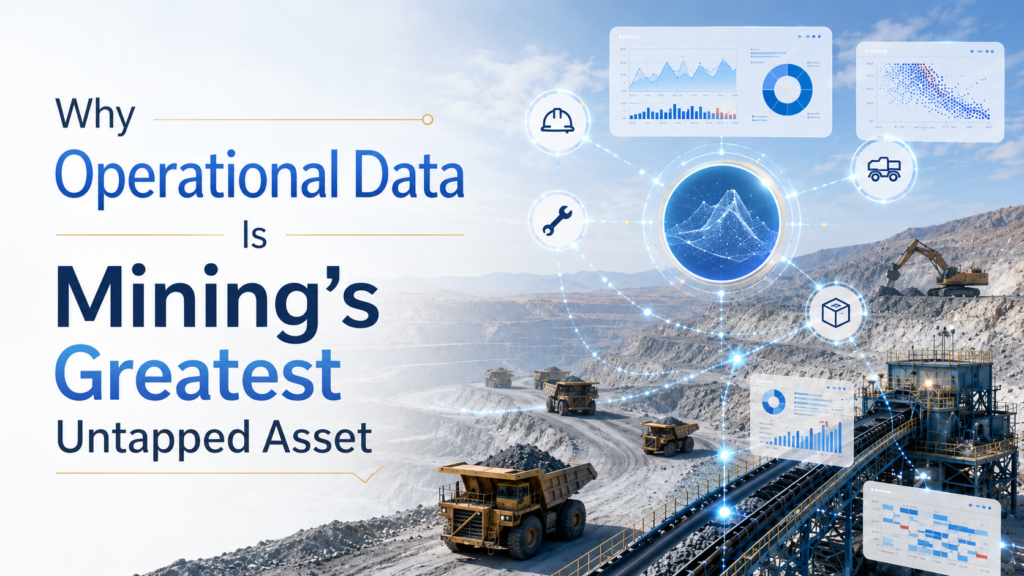
Mining companies generate enormous amounts of operational data every day. Every haul truck movement. Every crusher alarm. Every maintenance work order. Every laboratory result. Every production report. Every inventory transaction. Every shift handover. Every sensor reading.
The challenge is not collecting information. Most mining operations already have more operational data than they can effectively use.
The challenge is turning that information into better operational decisions. It is also a prerequisite for effective ai in mining projects.
For many mining organizations operational data remains one of the industry’s greatest untapped assets. Not because it does not exist but because it remains fragmented across systems departments and functions.
Mining Has No Shortage of Data
Modern mining operations rely on dozens of digital platforms. Fleet management systems monitor mobile equipment. Historians collect thousands of process variables every second. Maintenance systems track work orders inspections and equipment history. Laboratory systems generate assay results and quality measurements. ERP platforms manage procurement inventory and financial information. Geological models guide mine planning. Production systems record throughput recovery and operating performance.
Each system performs its job well. The problem is that they often operate independently. Operations sees one version of the business. Maintenance sees another. Planning works from different information. Supply chain relies on separate data again.
Individually each system provides valuable insight. Together they rarely tell the complete operational story.
Better Decisions Require Connected Information
Imagine a grinding circuit begins operating below target throughput. Operations can see production losses. Maintenance can review equipment history. Process engineers can analyze operating parameters. The laboratory has information on ore characteristics. Planning understands changes in mine sequencing.
Each team possesses part of the answer. Very few organizations have systems that bring those perspectives together automatically. As a result identifying root causes often requires multiple meetings manual analysis spreadsheets and significant engineering effort.
Connected operational data shortens that process dramatically. Rather than asking individual departments for information organizations can begin understanding how production maintenance quality geology and logistics influence one another in near real time.
The Highest-Value AI Projects Don’t Start with AI
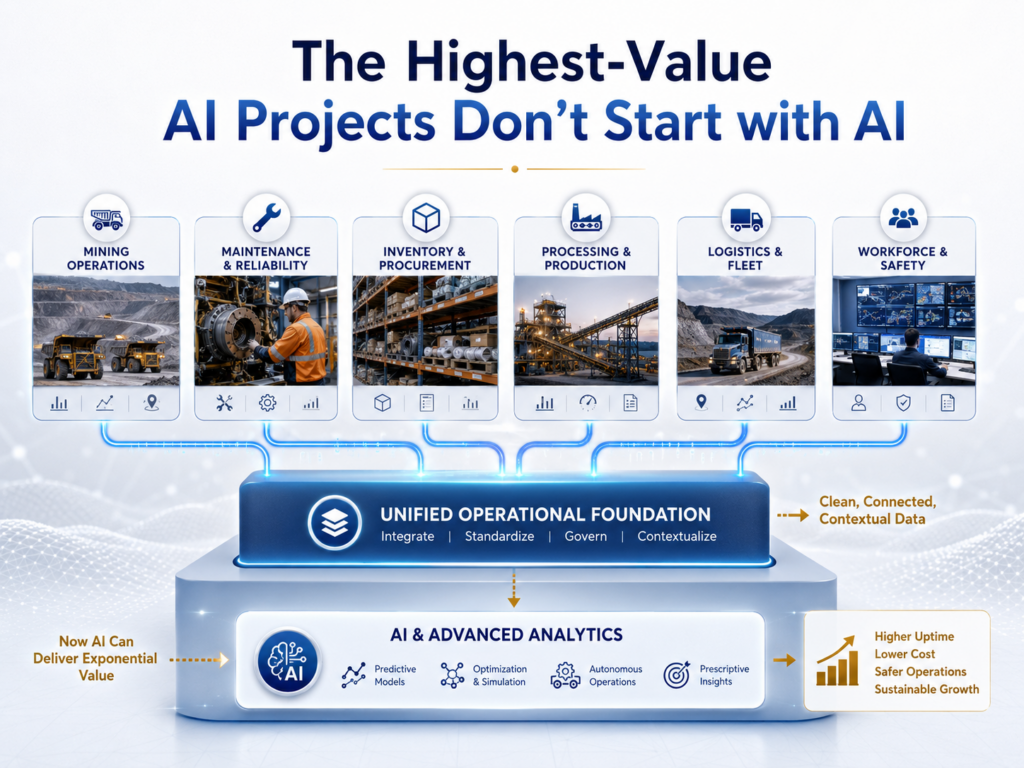
One of the biggest lessons emerging from ai in mining initiatives is that many of the highest-value opportunities are not new AI models. They are integration projects.
Recent operational assessments by mining consulting and metals consulting teams identified opportunities to connect maintenance work orders with production delays link procurement and inventory systems to maintenance planning improve master data integrate dispatch information with equipment performance and combine production quality and logistics data into a unified operational view.
These initiatives create the foundation that allows AI to generate recommendations based on the complete operating environment rather than isolated data sources. Organizations often discover that connecting existing systems creates immediate business value even before advanced AI capabilities are introduced.
Operational Data Is More Than Production Data
Many mining organizations associate operational data with sensors and equipment. In reality some of the most valuable information is not generated by machines. It comes from people.
Operator shift notes. Maintenance observations. Engineering recommendations. Inspection reports. Root cause investigations. Safety learnings. Technical procedures.
Much of this knowledge exists in handwritten notes spreadsheets PDFs emails or individual experience. When operational knowledge remains difficult to search or share organizations repeatedly solve the same problems. As experienced employees retire valuable expertise often leaves with them.
Connecting operational knowledge is just as important as connecting operational systems.
Better Data Leads to Better Maintenance
Maintenance provides one of the clearest examples of why connected information matters. Predicting equipment failure requires more than vibration data. Maintenance teams also need production history operating conditions inspection findings repair history parts availability and operator observations.
When these data sources remain disconnected maintenance becomes reactive. When they work together organizations can improve planning reduce downtime optimize spare parts inventory advance predictive maintenance in mining and prioritize work based on operational risk rather than individual equipment alarms.
From Mine to Mill Context Matters
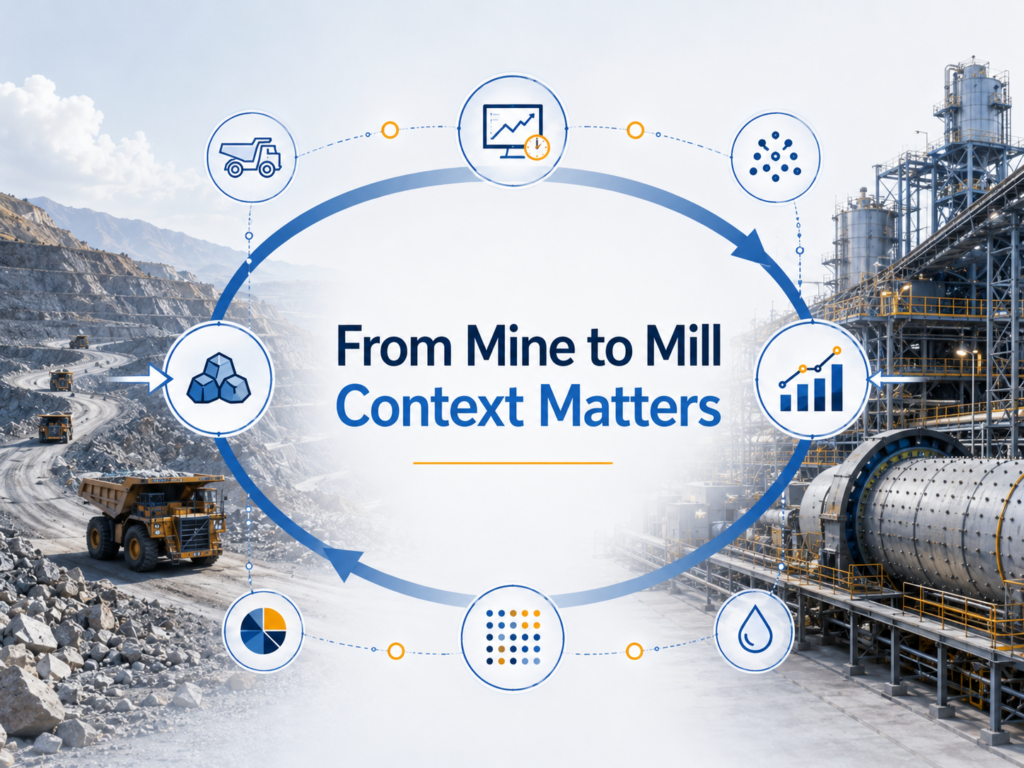
Mining is a connected value stream. Changes made upstream often create consequences downstream. Ore characteristics influence processing performance. Processing conditions affect product quality. Maintenance activities impact production schedules. Logistics constraints influence inventory. Energy availability affects throughput.
Looking at each operation independently rarely reveals the full picture. Connected operational data provides context. It allows organizations to understand how one decision influences the rest of the value chain and identify opportunities that would otherwise remain hidden.
Operational Data Supports Better Decisions Not More Reports
Mining organizations do not need more dashboards. Most already have them. What they need is information that helps people make better decisions.
Imagine if a supervisor could immediately understand why throughput declined during the previous shift. If maintenance planners knew which equipment failures would have the greatest production impact. If planners could evaluate how changes in mine sequencing would influence downstream processing. If operators received recommendations based on historical operating conditions rather than relying solely on experience.
This is where connected operational data begins creating measurable value. The objective is not simply reporting performance. It is improving it.
Building the Foundation for AI
Artificial intelligence depends on operational context. Without connected trusted information AI has an incomplete understanding of how the business operates.
Organizations that achieve the greatest value from AI typically begin by strengthening the operational foundation beneath it. That includes:
- Integrating operational systems
- Improving master data quality
- Standardizing operational processes
- Connecting maintenance and production information
- Eliminating duplicate data
- Creating consistent performance metrics
Only then can AI consistently support better operational decisions.
Final Thoughts
Mining companies are not sitting on a shortage of operational information. They are sitting on an opportunity.
Every day operations maintenance engineering planning laboratories and supply chain teams generate information that could improve performance across the business. The challenge is bringing that information together.
Organizations that connect operational data create far more than better reporting. They build the foundation for faster decisions stronger collaboration improved productivity more effective AI and ultimately better business performance.
In the years ahead competitive advantage will not belong to the mining companies with the most data. It will belong to the organizations that know how to turn operational data into operational decisions.
FAQs
Why is operational data described as mining’s greatest untapped asset?
Because most mines have plenty of data but lack the connected context needed to turn it into decisions. Information is fragmented across platforms and departments so teams waste time on manual analysis and meetings instead of fast action.
What kinds of initiatives create the biggest near-term value for AI in mining?
Integration and data foundation projects not new AI models. Connecting maintenance work orders with production delays linking procurement and inventory to maintenance and improving master data often delivers quick value.
What counts as operational data beyond sensors and equipment and why does it matter?
Human-generated knowledge such as operator shift notes maintenance observations inspection reports and technical procedures. If this knowledge is not searchable organizations keep solving the same problems and lose expertise when people retire.
How does connected operational data improve maintenance performance?
It gives maintenance teams the full picture including production history operating conditions inspection findings and parts availability. This shifts maintenance from reactive to proactive reducing downtime and optimizing spares.
How does connecting data from mine to mill change decision-making?
It adds context that single dashboards cannot provide. Teams can see how upstream changes affect downstream results helping them identify root causes faster and make better decisions across the value chain.