
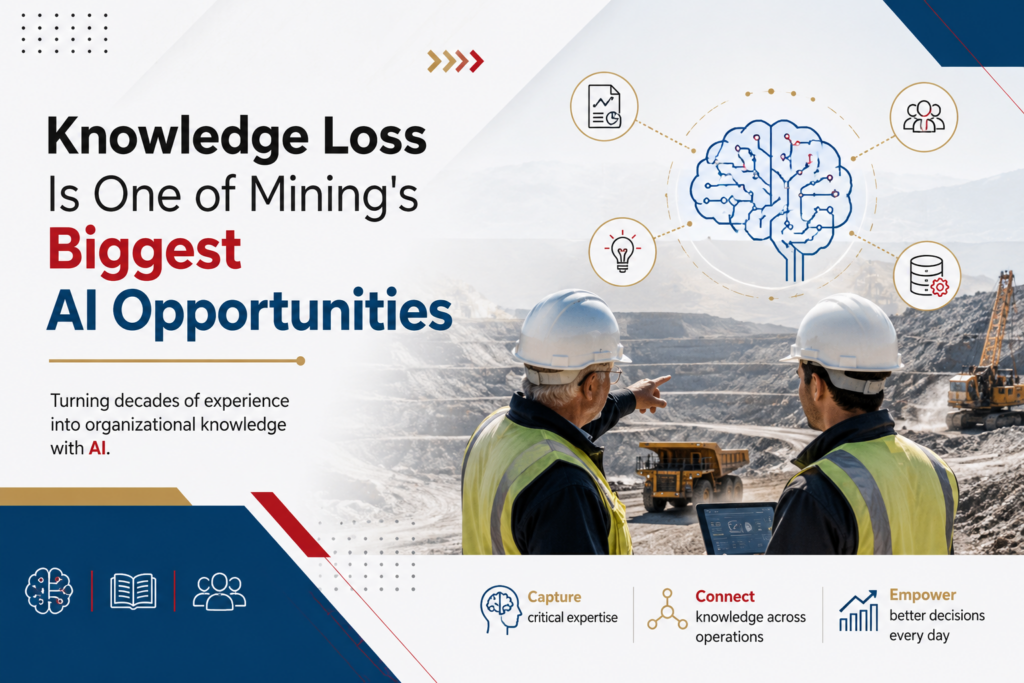
The mining industry is facing a challenge that receives far less attention than automation electrification or artificial intelligence.
It is losing decades of operational knowledge.
Across the industry experienced operators maintenance technicians planners metallurgists and engineers are retiring after careers spent solving complex operational problems. Much of what they know has never been formally documented. Instead it exists in conversations handwritten notes personal spreadsheets maintenance logs and experience gained over thousands of hours in the field.
When that knowledge leaves the organization it does not just create a workforce challenge. It creates an operational challenge.
Artificial intelligence is uniquely positioned to help address it. Not by replacing experienced people but by making their expertise available across the entire organization.
Mining Runs on Experience
Every mining operation develops its own way of solving problems. An experienced mill operator knows how subtle changes in ore characteristics affect throughput. A maintenance technician recognizes the sound of a bearing beginning to fail long before a sensor generates an alarm. A haul truck supervisor understands how weather conditions will affect cycle times. A reliability engineer knows which recurring failures rarely appear in maintenance reports.
Much of this expertise is not captured in procedures. It is learned over years of operating the business.
The challenge is ensuring that knowledge remains accessible as the workforce changes.
Documentation Alone Doesn’t Solve the Problem
Most mining organizations already have extensive documentation. Standard operating procedures. Maintenance manuals. OEM documentation. Inspection forms. Shift reports. Root cause investigations. Technical drawings. Digital records.
The problem is not a lack of information. It is that finding the right information at the right time is often difficult.
Operators may search through hundreds of pages of documentation. Maintenance technicians may rely on experienced colleagues because procedures do not contain the practical context needed to diagnose problems. Engineers may spend hours locating previous investigations or historical operating conditions before beginning a new analysis.
Knowledge exists. Access to that knowledge is the challenge.
AI Copilots Are Changing How Knowledge Is Used
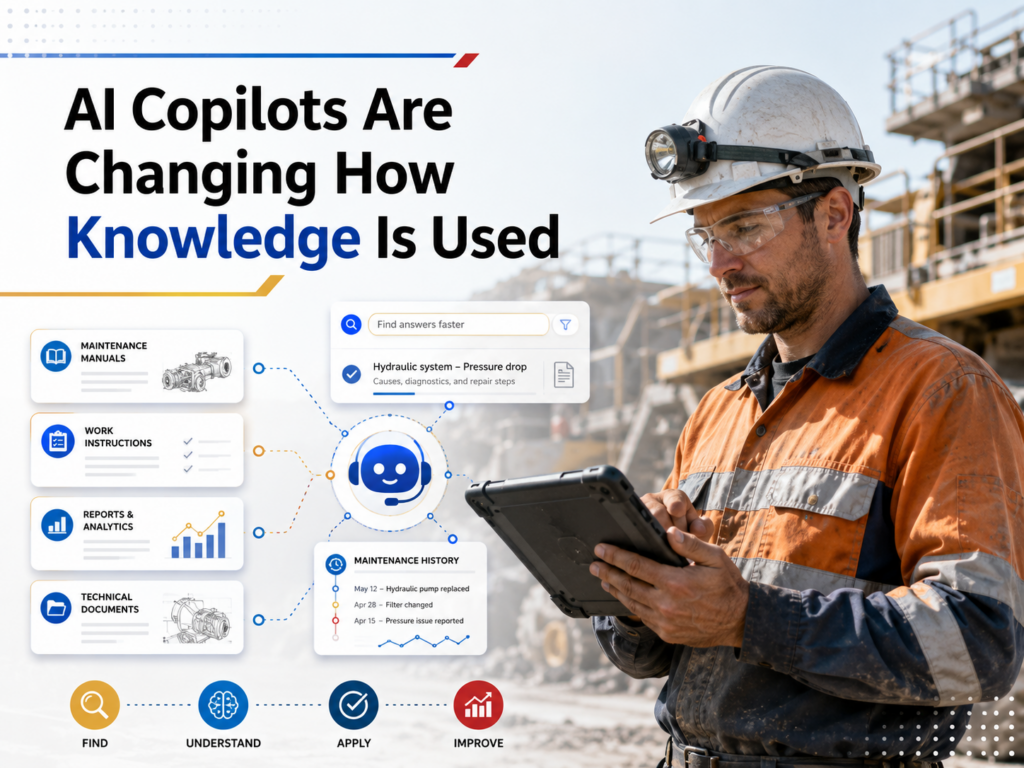
One of the most promising applications of AI in mining is the emergence of AI copilots. Rather than replacing operators or engineers AI copilots act as intelligent assistants that provide immediate access to operational knowledge.
Imagine a maintenance technician asking: Have we seen this conveyor fault before? Within seconds the AI copilot can search maintenance history work orders inspection reports equipment manuals and previous root cause analyses to identify similar failures recommend likely causes and suggest corrective actions.
An operator might ask: What operating conditions produced the highest recovery rate for this ore blend? Instead of manually searching reports from multiple systems the AI copilot can provide relevant historical data operating parameters and supporting documentation in a single response.
The value is not that AI knows more than experienced employees. It is that it makes organizational knowledge instantly accessible.
Digital Work Instructions Create More Than Standardization
Mining companies have invested in standard operating procedures for decades. Digital work instructions take that concept much further.
Rather than static documents stored on a shared drive digital work instructions guide employees through tasks while incorporating operational context equipment information safety requirements and real-time production data.
When combined with AI they become even more powerful. An AI-enabled work instruction can adapt guidance based on equipment conditions surface lessons learned from previous maintenance events highlight common failure modes recommend inspection points based on operating history link directly to drawings manuals and technical procedures and answer questions without requiring employees to search multiple systems.
Instead of simply telling employees what to do digital work instructions help explain why specific actions matter. This shortens learning curves while improving consistency across shifts and sites.
From Tribal Knowledge to Organizational Knowledge
Many mining organizations still depend heavily on tribal knowledge. Critical information that resides with a handful of experienced employees. That approach becomes increasingly risky as retirements accelerate.
Artificial intelligence provides an opportunity to transform tribal knowledge into organizational knowledge. Recent AI opportunity assessments identified practical AI use cases including voice-enabled maintenance assistants searchable technical documentation AI knowledge agents operational copilots and intelligent troubleshooting tools that capture expertise and make it available across the workforce.
Rather than asking employees to remember everything organizations can build systems that make expertise available whenever it is needed.
AI Helps New Employees Become Productive Faster
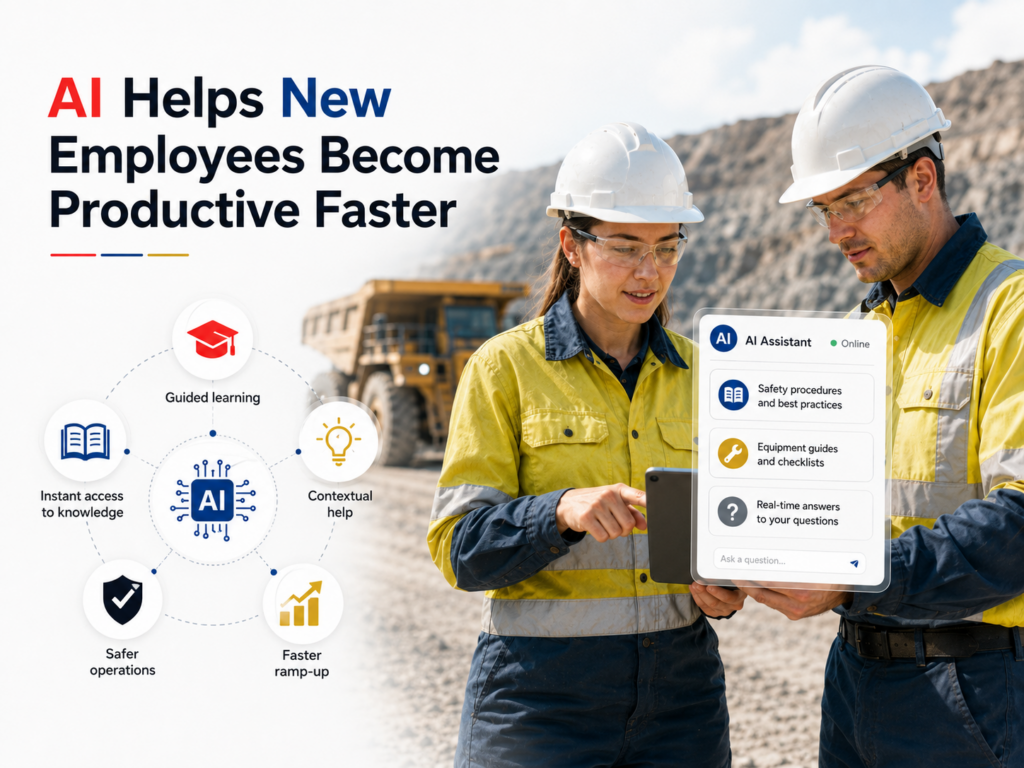
Finding skilled mining professionals has become increasingly difficult. Training new employees takes time.
AI cannot replace practical experience but it can significantly shorten the learning curve. New operators can access equipment history operating procedures and best practices without waiting for an experienced colleague to become available. Maintenance technicians can receive contextual guidance while performing complex work. Engineers can review previous investigations instead of starting every analysis from scratch.
The result is a workforce that becomes productive more quickly while maintaining greater consistency across operations.
Knowledge Becomes More Valuable When It’s Connected
An AI copilot is only as effective as the information it can access. The greatest value comes when knowledge is connected across the entire operation.
Maintenance history. Production reports. Equipment condition data. Laboratory results. Engineering documents. Safety investigations. Inspection records. Digital work instructions.
When these information sources remain isolated employees spend valuable time searching for answers. When they are connected AI can provide recommendations that reflect the complete operational context rather than a single data source.
The Future of Mining AI Is Human-Centered
Much of the discussion surrounding artificial intelligence focuses on automation. In reality one of AI’s greatest opportunities is helping people perform their jobs more effectively.
The future is not removing people from mining operations. It is giving operators technicians engineers supervisors and planners immediate access to the knowledge they need to make better decisions.
Organizations that successfully combine AI copilots digital work instructions connected operational data and structured knowledge management will be better positioned to preserve expertise improve decision-making accelerate training and strengthen operational performance.
Final Thoughts
Mining companies have spent decades building operational knowledge. The challenge now is ensuring that knowledge remains available as the workforce evolves.
Artificial intelligence offers a powerful opportunity. Not simply to automate work but to capture experience connect information and make expertise available to every employee every shift and every site.
Partnering with a mining consultancy or an experienced mining consultant can help organizations prioritize initiatives and implement solutions responsibly.
In the years ahead the organizations that gain the greatest advantage from AI may not be those with the most sophisticated algorithms. They will be the ones that turn decades of operational knowledge into an asset the entire organization can use every day.
FAQs
Why is knowledge loss such a pressing issue in mining?
Decades of practical know-how are walking out the door as experienced workers retire. Much of that expertise was never formally documented. It lives in conversations notes and hard-won experience. When it leaves the impact is an operational risk because site-specific problem-solving knowledge becomes harder to access.
What are AI copilots in mining and how do they change how knowledge is used?
AI copilots are intelligent assistants that surface the right operational knowledge instantly. They search maintenance history work orders manuals and past analyses to answer questions like Have we seen this fault before? Their value comes from making existing knowledge immediately accessible across the workforce.
How do digital work instructions differ from traditional SOPs?
Traditional SOPs are static documents. Digital work instructions are dynamic tools that embed context such as equipment status safety needs and real-time data. When AI-enabled they adapt guidance highlight failure modes recommend inspection points and answer questions without users searching multiple systems.
What does moving from tribal knowledge to organizational knowledge look like with AI?
It means capturing expert insights and making them searchable reusable and available to everyone. Practical use cases include voice-enabled assistants searchable documentation AI knowledge agents and intelligent troubleshooting tools. Expertise becomes an asset the whole workforce can use on demand.
How does AI help new employees become productive faster?
AI shortens the learning curve by putting equipment history procedures best practices and prior investigations at a new hire’s fingertips. Operators and technicians get contextual guidance while engineers build on past analyses. The result is faster ramp-up and more consistent performance.