
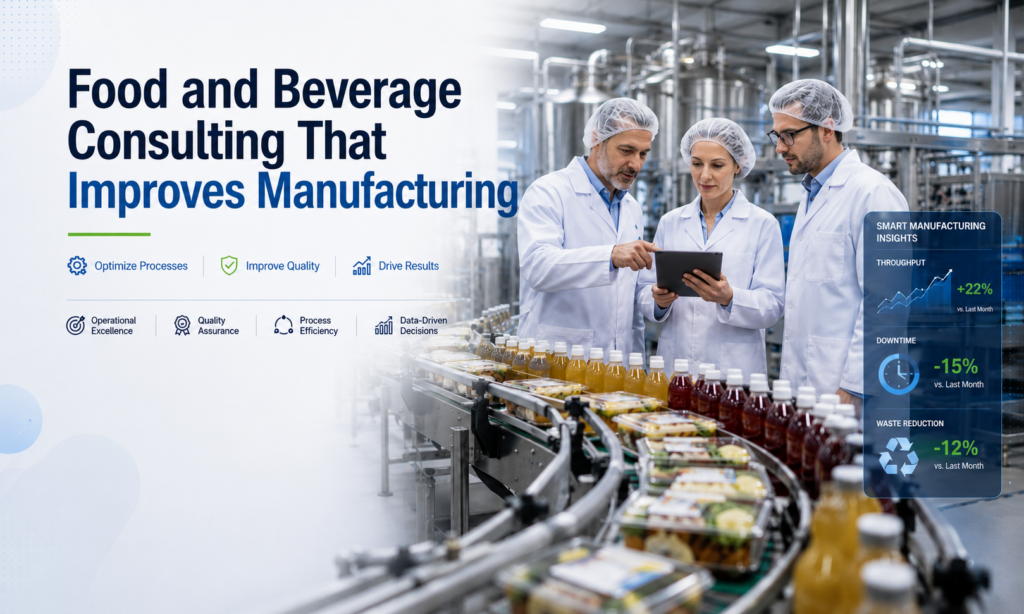
Food and beverage manufacturers face relentless pressure to improve performance. Consumer demand continues to evolve. Input costs remain volatile. Labor shortages persist. Retailers expect higher service levels and production schedules leave little room for downtime or inefficiency.
In this environment operational performance has become a competitive advantage. It is the backbone of operational excellence in food manufacturing.
Many manufacturers turn to food and beverage consulting firms to improve productivity reduce costs and increase profitability. Yet not all improvement initiatives deliver lasting results. Too often organizations focus on isolated projects rather than addressing the operational systems that determine day-to-day performance.
The manufacturers achieving the greatest success are not simply improving individual processes. They are strengthening the entire operation from maintenance and production to planning quality leadership and execution.
Manufacturing Performance Is Built on Operational Excellence
Food manufacturing is one of the most complex production environments in the world. Every day manufacturers must balance production schedules sanitation requirements product quality labor availability equipment reliability ingredient variability inventory and customer demand.
A breakdown in any one of these areas quickly affects the rest of the operation. An unexpected equipment failure delays production. A delayed production run affects sanitation schedules. Schedule changes increase product changeovers. Additional changeovers reduce throughput. Lower throughput creates overtime and increases production costs.
Operational performance is rarely limited by a single issue. It is the result of how well every part of the operation works together.
Capacity Problems Are Often Execution Problems
Many manufacturers believe increasing output requires additional equipment or production lines. In reality significant capacity often exists within current operations.
Across multiple food manufacturing improvement programs we have found that throughput constraints frequently stem from startup losses, lengthy changeovers inconsistent standard work product giveaway packaging reliability issues, manual data collection and ineffective daily management rather than physical equipment limitations. Addressing these operational constraints has enabled manufacturers to unlock substantial additional capacity while reducing costs.
Before investing millions in capital projects manufacturers should ask a different question. Are we maximizing the assets we already have?
Maintenance Is One of the Biggest Drivers of Performance
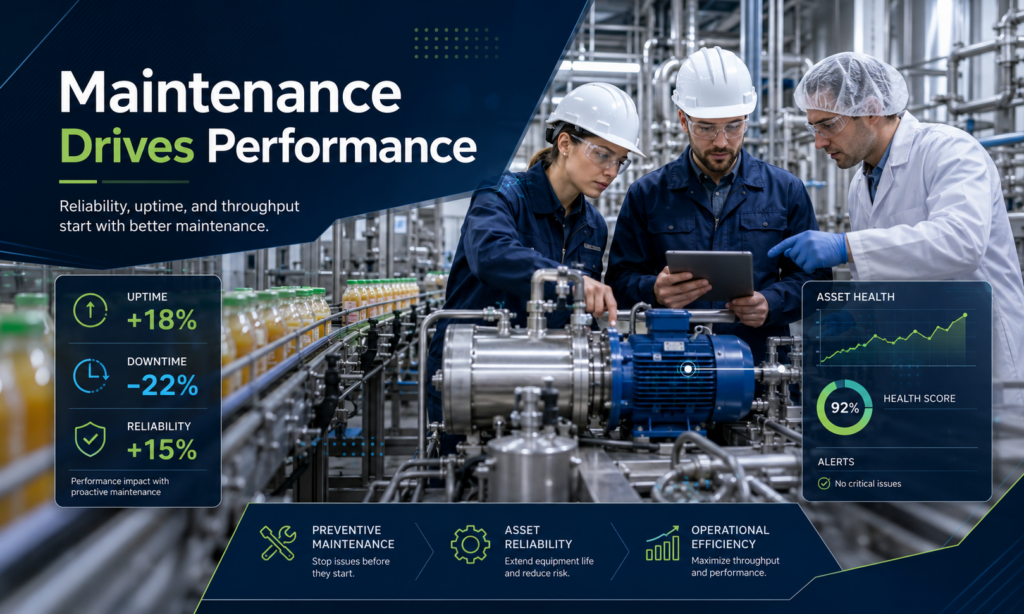
Maintenance is often viewed as a support function. In preventive maintenance food manufacturing programs however maintenance is a strategic lever.
In reality it is one of the largest contributors to manufacturing performance. When equipment reliability improves production becomes more stable unplanned downtime decreases schedule adherence improves, product quality becomes more consistent, labor productivity increases and maintenance costs decline.
The opposite is equally true. Reactive maintenance creates uncertainty throughout the operation forcing production teams to adjust schedules increase overtime and respond to unexpected failures rather than focusing on continuous improvement.
Leading food manufacturers are shifting from reactive maintenance toward structured asset management programs that emphasize work management preventive maintenance Reliability Centered Maintenance (RCM) Root Cause Analysis (RCA) CMMS optimization and management operating systems. These initiatives help create sustainable improvements in reliability rather than simply responding to breakdowns.
Better Planning Creates Better Production
Production planning is about much more than scheduling products. It influences inventory levels material availability, cleaning schedules labor utilization customer service and equipment utilization.
Many food manufacturers experience avoidable production losses because planning processes fail to reflect operational realities on the plant floor. Successful operations align production schedules with equipment capabilities sanitation requirements staffing maintenance activities and customer demand. Improving planning often reduces waste before production even begins.
Quality and Efficiency Go Hand in Hand
Quality should not compete with productivity. The highest-performing food manufacturers improve both simultaneously. Standard work mistake-proofing root cause analysis operator training and visual management reduce variability while increasing production stability.
One food manufacturer improved right-first-time quality to 99 percent while simultaneously reducing material losses by 80 percent, increasing labor productivity by 25 percent and generating a 6.2 million dollar annualized financial impact through coordinated improvements across operations planning quality and management systems.
Operational excellence is not achieved by optimizing one department. It comes from improving how departments work together.
Data Only Creates Value When It Improves Decisions
Most food manufacturers already collect enormous amounts of production data including OEE downtime quality maintenance waste labor and throughput. The challenge is not collecting information. It is turning that information into better operational decisions. Tracking OEE (oee food manufacturing) metrics helps teams prioritize constraints and focus improvements where they matter most.
Leading manufacturers are replacing manual reporting with real-time operational visibility that allows supervisors to identify problems earlier, escalate issues faster and focus improvement efforts where they create the greatest business impact. Management operating systems electronic performance boards structured KPIs and standardized leader routines help transform operational data into daily execution.
Technology alone does not improve performance. Operational discipline does.
AI Is Expanding What’s Possible
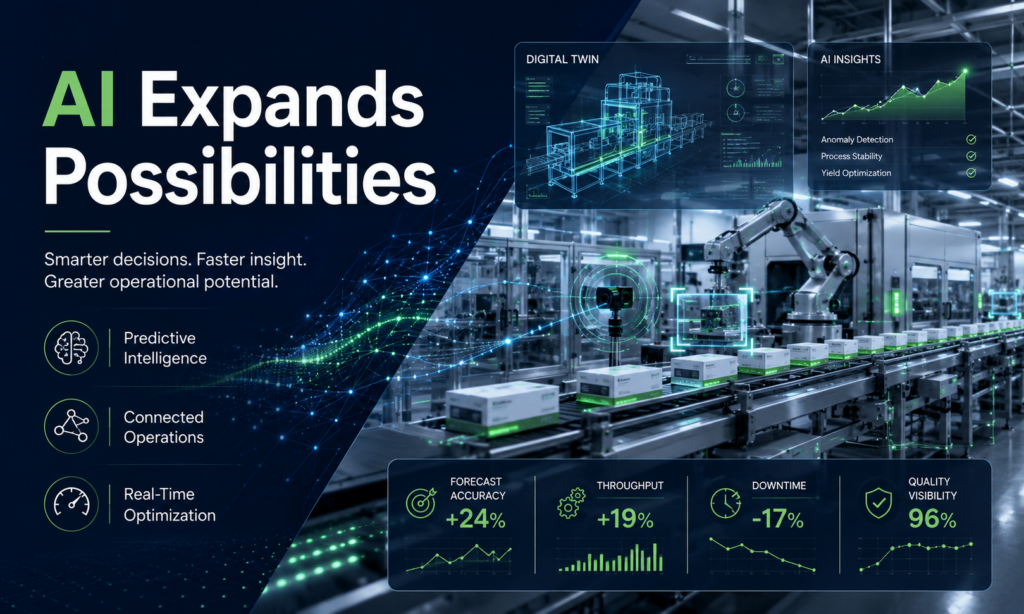
Artificial intelligence is becoming one of the most significant opportunities within food manufacturing. Not because it replaces people. Because it helps them make better decisions. Many leaders now pilot ai in food manufacturing to de-risk scale-up guided by ai consulting companies that help identify the most valuable ai use cases.
Organizations are beginning to use AI to predict equipment failures before they occur support maintenance technicians with AI copilots generate digital work instructions, capture operational knowledge improve production scheduling optimize inventory and analyze recurring downtime patterns.
These capabilities become significantly more valuable when built upon standardized maintenance processes, reliable operational data and disciplined execution. AI is not replacing operational excellence. It is strengthening it.
What the Best Food and Beverage Consulting Firms Focus On
The most successful consulting engagements do not begin with solutions. They begin with understanding where operational performance is being lost. Leading food and beverage consulting teams start by clarifying the true sources of loss before prescribing tools or technology.
That means evaluating equipment reliability maintenance work management changeover performance production flow planning and scheduling material losses quality systems management operating systems workforce capability and operational data. Rather than treating these as independent initiatives leading organizations improve them as part of an integrated operational strategy. This creates sustainable gains that continue long after individual improvement projects have ended.
Final Thoughts
Food and beverage manufacturers operate in an industry where small improvements can create significant financial returns. Increasing throughput without adding equipment reduces downtime improving equipment reliability minimizing waste strengthening planning and developing frontline leadership. These improvements rarely come from a single project or technology investment. They come from building an operation where maintenance production planning quality and leadership work together toward common performance objectives.
The manufacturers that achieve the greatest competitive advantage will not simply produce more. They will build operational systems that consistently deliver higher productivity, greater reliability lower costs and sustainable business performance. That is the essence of operational excellence in food manufacturing.
FAQs
Why do many improvement initiatives fail to deliver lasting results?
Because they target isolated problems instead of the operational systems that drive day-to-day performance. Sustainable gains come from strengthening how the whole operation works together.
If we need more capacity do we have to buy new equipment?
Often no. Significant untapped capacity typically exists within current operations. Addressing execution issues like changeovers standard work and daily management can unlock substantial throughput without capital spend.
Why is maintenance one of the biggest drivers of performance?
Reliable equipment stabilizes the entire operation. When reliability improves unplanned downtime falls schedule adherence rises, quality becomes consistent and costs decline. Structured asset management creates lasting reliability.
How should we use data and AI to improve performance?
Data creates value when it drives better decisions and daily execution. AI then amplifies this by predicting failures, assisting technicians and improving scheduling but only when built on standardized processes and reliable data.
Where do the best food and beverage consulting firms start?
Not with tools but with a clear picture of where performance is being lost. They assess reliability maintenance planning flow quality systems and data then improve them as part of an integrated strategy for lasting results.