
European manufacturers are operating under increasing pressure. Across the UK and Europe rising energy costs labour shortages, inflationary pressures supply chain disruption and ongoing geopolitical uncertainty are creating a far more challenging operating environment for industrial businesses.
For many manufacturers the issue is no longer simply growth. It is protecting margins, maintaining operational stability and remaining competitive in a high-cost market.
As a result operational excellence is becoming a far more significant priority across European manufacturing. What was once viewed primarily as a lean manufacturing and continuous improvement initiative is now being treated as a core operational requirement tied directly to productivity cost control, reliability energy optimisation and long-term competitiveness.
Operational Pressure Is Increasing Across European Industry
Over the past several years manufacturers across Europe have faced a combination of challenges that continue to place pressure on operations:
- Volatile energy prices
- Increasing raw material costs
- Ongoing supply chain instability
- Labour availability and skills shortages
- Aging infrastructure and production assets
- Rising customer expectations around quality and delivery performance
- Pressure to modernise operations through digital manufacturing and AI
For many organisations the challenge is not identifying opportunities for improvement. Most operational leaders already understand where inefficiencies exist within their facilities. The greater challenge is implementing improvements effectively and sustaining results over time while continuing to meet production quality and customer requirements.
This is one of the reasons operational excellence is moving higher on the strategic agenda across European manufacturing.
Operational Inefficiency Quietly Reduces Profitability
In many manufacturing environments operational inefficiencies develop gradually over time and become embedded within day-to-day operations. Production instability reactive maintenance poor planning discipline and disconnected operational processes often create significant hidden costs across the business.
Common examples include:
- Unplanned downtime and reactive maintenance activity
- Production variability and unstable operating conditions
- Poor production planning and changeover management
- Excess work-in-process inventory
- Inefficient material movement and factory flow
- Low overall equipment effectiveness (OEE)
- Quality losses and rework
- Idle equipment consuming unnecessary energy
- Limited visibility into operational performance across departments
- Disconnected data between production maintenance and supply chain teams
These issues do not only increase operational costs. They also reduce throughput capacity, create scheduling instability, increase operational risk and place additional pressure on labour and maintenance teams. In Europe’s current operating environment many manufacturers are recognising that even relatively small operational inefficiencies can have a significant impact on profitability.
Energy Costs Are Now an Operational Issue
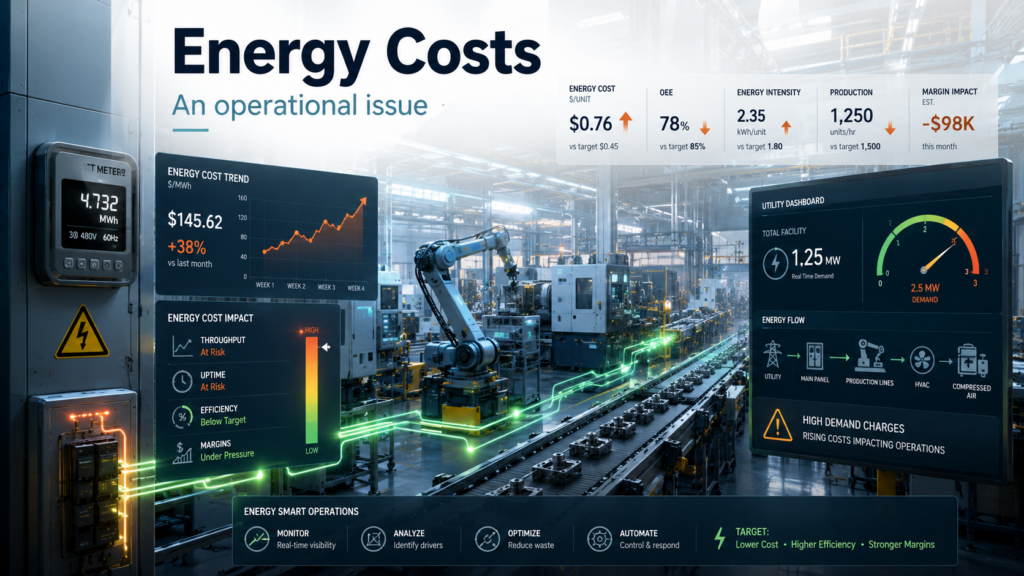
One of the most significant shifts taking place across European manufacturing is the growing recognition that energy optimisation is not simply a facilities or utilities issue. It is increasingly being treated as an operational performance issue.
Many manufacturers are discovering that excessive energy consumption is often linked directly to operational inefficiencies such as unstable production schedules frequent equipment stoppages and restarts poorly maintained assets, compressed air and steam losses, excessive idle runtime production bottlenecks, inconsistent operating procedures and limited operational visibility.
As a result organisations are beginning to approach energy reduction through operational improvement rather than isolated energy initiatives alone reinforcing lean manufacturing practices that stabilise flow and eliminate waste.
In many facilities improving reliability stabilising production flow, reducing downtime and improving maintenance execution can significantly reduce energy consumption without major capital investment. This directly supports energy optimisation goals. For example predictive maintenance in manufacturing can stabilize assets reduce unplanned stoppages and curb energy waste.
Why Many Improvement Initiatives Fail to Sustain Results
Most manufacturers have launched operational improvement initiatives at some point. However sustaining results over the long term is often far more difficult than identifying opportunities for improvement.
A common issue is that improvement programmes remain disconnected from daily operational management and plant-floor execution. Organisations invest in lean manufacturing initiatives digital systems reporting dashboards isolated digital initiatives and new operational technologies but fail to address standardised operating practices management routines accountability systems cross-functional coordination operational discipline and behavioural adoption at site level.
As a result improvements frequently lose momentum once initial implementation activity is complete. This is particularly important within manufacturing environments where long-term operational stability depends heavily on consistency process discipline and sustained execution across multiple functions.
Operational excellence is not achieved through isolated projects alone. It requires structured implementation, operational ownership and continuous reinforcement within day-to-day operations.
The Role of Digital Manufacturing and AI
Digital manufacturing and AI are also becoming increasingly important within European industry. However many organisations are beginning to recognise that technology alone does not improve operational performance.
The greatest value is typically achieved when digital capabilities are embedded directly into operational workflows and decision-making processes. Examples include predictive maintenance in manufacturing to identify equipment issues before failure occurs real-time operational visibility across production and maintenance activities Digital Management Operating Systems (MOS) AI-supported production planning and scheduling automated operational KPI tracking digital workflows for maintenance and operations teams AI-enabled quality and process analytics and real-time identification of abnormal operating conditions and inefficiencies.
The objective is not simply generating more operational data. It is improving responsiveness, consistency visibility and execution across the business. Manufacturers that successfully integrate operational excellence with digital manufacturing capabilities are often better positioned to improve productivity, reduce operational waste and increase operational stability.
Operational Excellence Is Becoming a Competitive Requirement
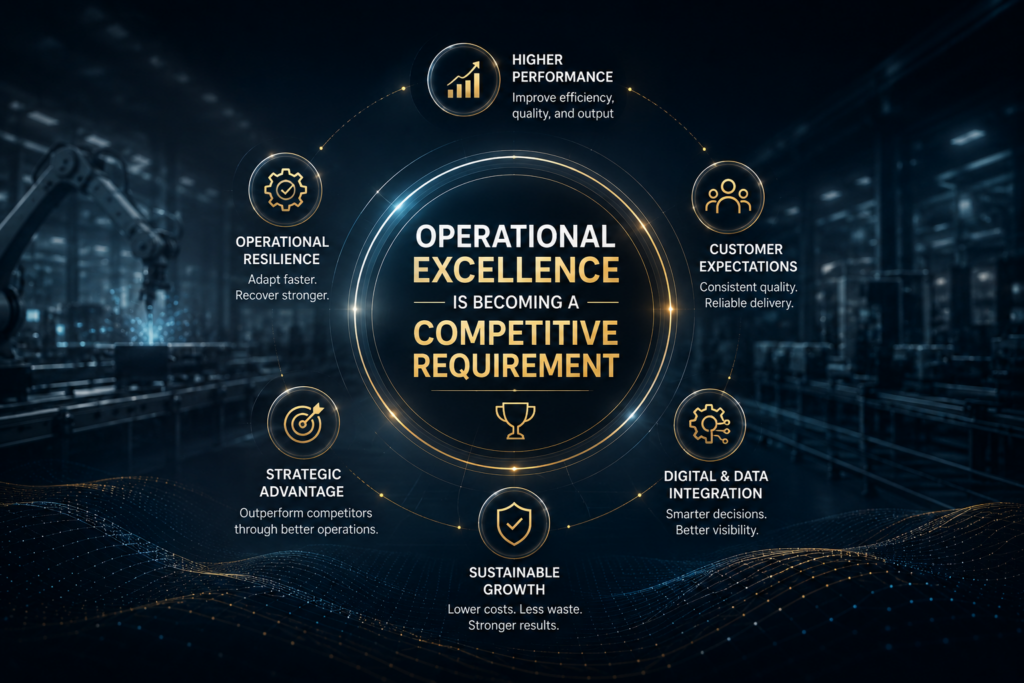
For many European manufacturers operational excellence is no longer viewed solely as a cost reduction initiative. It is increasingly becoming essential to maintaining competitiveness within a high-cost and highly volatile operating environment. This includes better alignment of lean manufacturing disciplines with digital manufacturing investments.
Organisations capable of improving operational stability, reliability planning discipline and execution are often better positioned to protect margins improve delivery performance increase throughput capacity, reduce operational disruption improve asset utilisation support sustainable growth and scale digital and AI initiatives more effectively.
In many cases the gap between high-performing manufacturers and struggling operations is no longer strategy alone. It is execution capability.
The Future of European Manufacturing Will Depend on Execution
European manufacturers do not lack improvement ideas, technologies or operational strategies. What many organisations continue to struggle with is operational execution at scale.
The manufacturers most likely to succeed over the coming decade will be those capable of operationalising improvement across people processes technology data and AI while maintaining operational discipline throughout the business.
Operational excellence is no longer optional. Across European manufacturing it is becoming fundamental to operational resilience energy optimisation profitability and long-term competitiveness.
FAQs
Why is operational excellence becoming a top priority for European manufacturers now?
Because the operating environment has become high-cost and volatile. Rising energy prices, labour shortages, inflation supply chain instability aging assets and higher customer expectations are squeezing margins and disrupting stability.
How do small operational inefficiencies quietly erode profitability?
They compound into hidden costs and capacity losses. Issues like unplanned downtime production variability, poor planning, excess WIP low OEE quality losses idle energy and disconnected data increase costs and reduce throughput.
Why are energy costs now considered an operational issue rather than just a utilities concern?
Because excessive energy use is often a symptom of unstable operations. Factors such as frequent stops/starts, poor maintenance, excessive idle time and bottlenecks drive energy waste. Improving reliability and flow can cut energy consumption without major capital spend.
Why do many improvement initiatives fail to sustain results and what’s needed to make them stick?
They are often disconnected from daily plant management. Companies invest in lean digital tools and new technologies but neglect standardised practices management routines accountability and behavioural adoption. Sustained results require structured implementation, operational ownership and continuous reinforcement.
What role should digital manufacturing and AI play in operational excellence?
They should be embedded in workflows to improve responsiveness consistency , visibility and execution. High-value applications include predictive maintenance real-time visibility AI-supported planning automated KPI tracking and digital workflows. When integrated with lean disciplines these capabilities boost productivity reduce waste and increase stability.