
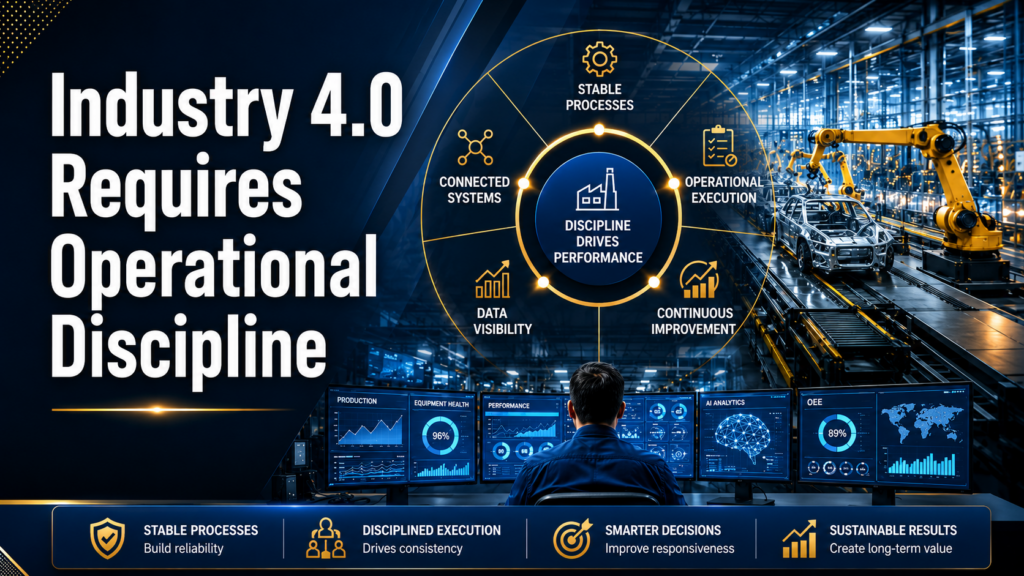
Germany has long been recognised as one of the world’s leading industrial economies. From automotive and machinery manufacturing to chemical electronics and industrial engineering German manufacturers have built their reputation on precision reliability process discipline and operational excellence. The concept of Industrie 4.0 (Industry 4.0) itself originated in Germany driven by the ambition to create smarter more connected manufacturing environments capable of improving productivity and strengthening industrial competitiveness.
Today however many German manufacturers are facing a more difficult operating environment than at any point in recent years. Rising energy costs labour shortages increasing operational complexity, geopolitical instability and global competitive pressure are forcing industrial organisations to rethink how digital manufacturing initiatives deliver measurable operational value.
As a result many manufacturers are recognising an important reality. Industry 4.0 alone does not improve operational performance. Operational discipline still sits at the centre of manufacturing excellence.
Germany’s Industry 4.0 Maturity Is Creating New Challenges
German manufacturers have invested heavily in digital manufacturing technologies over the past decade. Across the industrial sector organisations have implemented connected production systems advanced automation industrial IoT platforms, digital dashboards, real-time operational monitoring AI and analytics initiatives and smart factory technologies.
However many companies are now moving beyond the initial excitement surrounding Industry 4.0 and beginning to evaluate a more practical question. Why have some digital initiatives failed to deliver sustainable operational improvement?
In many cases the issue is not the technology itself. The issue is operational execution. Manufacturers frequently discover that disconnected processes, inconsistent operating practices unstable production environments and limited operational ownership reduce the effectiveness of even the most advanced digital systems.
Technology can increase visibility. It cannot replace operational discipline.
Stable Processes Remain Critical
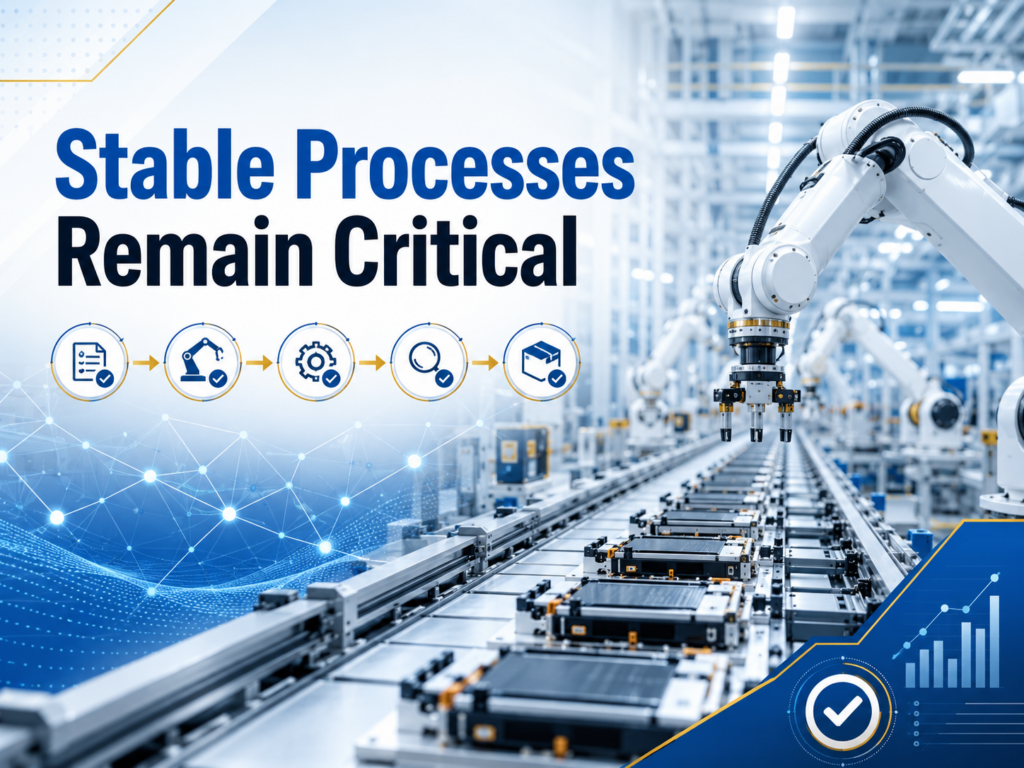
High-performing manufacturing operations are still built on stable and repeatable processes. Regardless of how advanced digital systems become manufacturers still require standardised operating procedures, reliable production planning, stable production flow effective maintenance execution, cross-functional coordination, operational accountability consistent management routines and process ownership at site level.
Without these foundations digital manufacturing initiatives often struggle to scale across the organisation. In some cases Industry 4.0 technologies simply expose operational instability more quickly. Poor data quality inconsistent workflows and disconnected operational processes become increasingly visible once systems are digitally connected.
This is one reason many German manufacturers are shifting focus away from technology deployment alone and placing greater emphasis on operational integration and execution.
Industry 4.0 Has Increased the Need for Operational Coordination
Modern manufacturing environments are becoming significantly more interconnected. Production maintenance quality engineering logistics and supply chain functions now rely on shared operational data and increasingly integrated digital systems.
As a result, operational coordination has become more important than ever. When operational processes are not aligned manufacturers often experience delayed decision-making production instability conflicting priorities between departments, reduced responsiveness, poor escalation management and limited visibility into root causes of operational issues.
Many organisations are now recognising that digital manufacturing requires stronger operational management systems rather than fewer. This is one reason Digital Management Operating Systems (MOS) are becoming increasingly important within modern manufacturing environments. Digital MOS structures help connect operational visibility management routines, escalation processes and accountability systems across functions.
The objective is not simply collecting more operational data. It is improving operational responsiveness and execution consistency across the business.
AI Is Only Effective Within Stable Operational Environments
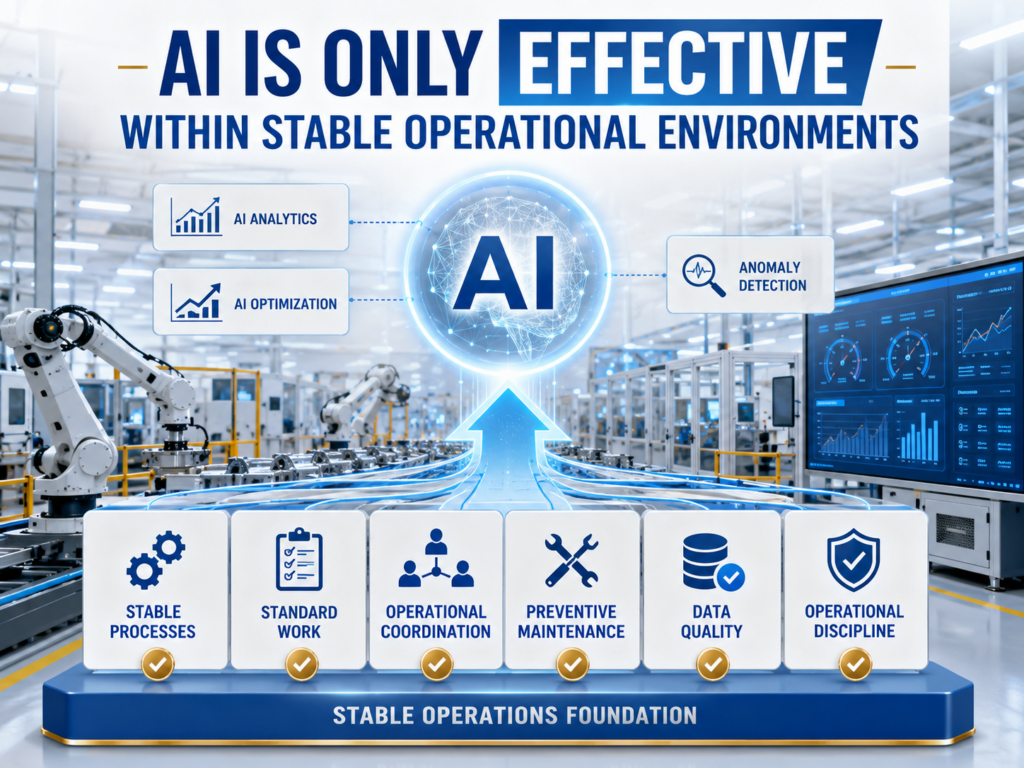
AI adoption is also accelerating across German manufacturing. Put simply AI in manufacturing is expanding but outcomes depend on context and disciplined execution.
However manufacturers are becoming increasingly cautious about unrealistic expectations surrounding AI-driven transformation. The organisations seeing the greatest results from AI are typically those applying it within stable and disciplined operational environments.
Examples include predictive maintenance to improve equipment reliability AI-assisted production scheduling real-time operational anomaly detection automated quality analysis production flow optimisation maintenance planning support and AI-enabled operational visibility.
These applications are often most effective when operational processes are already structured repeatable and well-managed. When operational instability exists AI systems frequently amplify existing process problems rather than resolve them.
This is why many successful manufacturers continue to prioritise operational discipline process stability and management consistency alongside digital and AI initiatives.
Germany’s Competitive Advantage Has Always Been Operational Excellence
Germany’s industrial strength has never been based solely on technology. It has historically been built on engineering precision process reliability production consistency workforce capability, operational discipline and long-term industrial thinking.
Those principles remain highly relevant within modern digital manufacturing environments. Industry 4.0 technologies are creating significant opportunities for manufacturers to improve visibility responsiveness and operational performance. However sustainable results still depend on disciplined execution throughout the organisation.
Technology alone does not create manufacturing excellence. Operational excellence remains the foundation.
The Future of Industry 4.0 Will Depend on Execution
As German manufacturers continue modernising operations the focus is increasingly shifting from technology implementation alone to operational adoption and execution.
The manufacturers most likely to succeed over the coming decade will not simply be those investing in the most advanced technologies. They will be the organisations capable of integrating digital capabilities into stable disciplined and operationally mature environments.
Industry 4.0 requires more than connected systems and digital tools. It requires operational discipline.
FAQs
Why haven’t many Industry 4.0 investments delivered the expected operational improvements?
Because the bottleneck is often operational execution not technology. Disconnected processes, inconsistent operating practices unstable production and unclear ownership limit the impact of digital tools.
What does operational discipline look like in practice?
It is the foundation that lets digital tools create value. Core elements include standardised operating procedures, consistent management routines, reliable production planning stable production flow, effective maintenance execution cross-functional coordination and operational accountability at site level.
How has Industry 4.0 increased the need for coordination and what is the role of a Digital MOS?
As production maintenance quality engineering logistics and supply chain become more interconnected misaligned processes create delays, instability conflicting priorities and weak escalation. A Digital Management Operating System (MOS) links operational visibility with daily routines, escalation processes and accountability across functions.
When is AI most effective in manufacturing and what are good use cases?
AI works best in stable disciplined environments where processes are structured and repeatable. Effective applications include predictive maintenance AI-assisted production scheduling real-time anomaly detection automated quality analysis maintenance planning support and AI-enabled operational visibility.
What should manufacturers prioritise to get sustainable value from Industry 4.0?
Focus on execution before expansion. Stabilise and standardise core processes strengthen cross-functional coordination, clarify ownership implement or reinforce a Digital MOS and deploy AI where processes are already stable. This alignment turns digital capability into measurable lasting operational performance.