
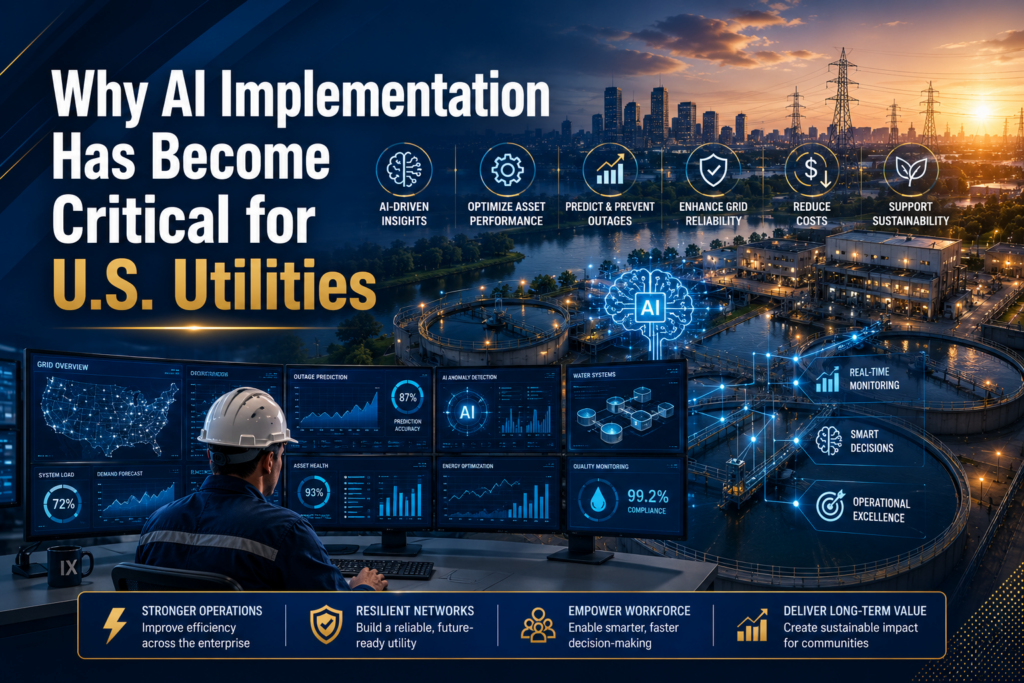
In recent utilities sector news the U.S. utilities industry is under more operational pressure than ever before. Electricity demand is rising rapidly. Aging infrastructure continues to strain reliability. Extreme weather events are increasing outage risks. Utilities are also facing skilled labor shortages growing capital project backlogs and increasing pressure to modernize the grid while controlling costs.
Now the rapid growth of AI data centers is creating an entirely new level of demand on utility infrastructure. This surge is part of a broader utilities sector transformation that is reshaping planning and investment timelines.
For many utilities the challenge is no longer deciding whether modernization is necessary. The challenge is executing modernization fast enough to keep up with growing operational complexity.
Artificial intelligence is becoming a critical part of that effort. But utilities are learning that AI success is not about deploying isolated tools or running disconnected pilot programs. Real value comes from implementing AI in a way that improves operational execution across maintenance reliability outage response field operations and workforce productivity.
Utilities Are Facing a New Operational Reality
Utilities have historically operated in relatively stable environments. Today that stability is changing. The rise of hyperscale data centers electrification renewable integration and grid modernization is forcing utilities to manage far more complexity across operations.
At the same time utilities must continue improving grid reliability outage response asset performance workforce productivity storm resilience regulatory compliance and customer responsiveness.
This is creating a major operational execution challenge across the industry. Many utilities still operate with fragmented systems disconnected data manual workflows and limited real-time operational visibility. Critical field knowledge often resides with experienced employees nearing retirement while newer workers are expected to manage increasingly complex operations.
As operational demands increase utilities are recognizing that traditional ways of working are no longer enough.
Why AI Matters Now
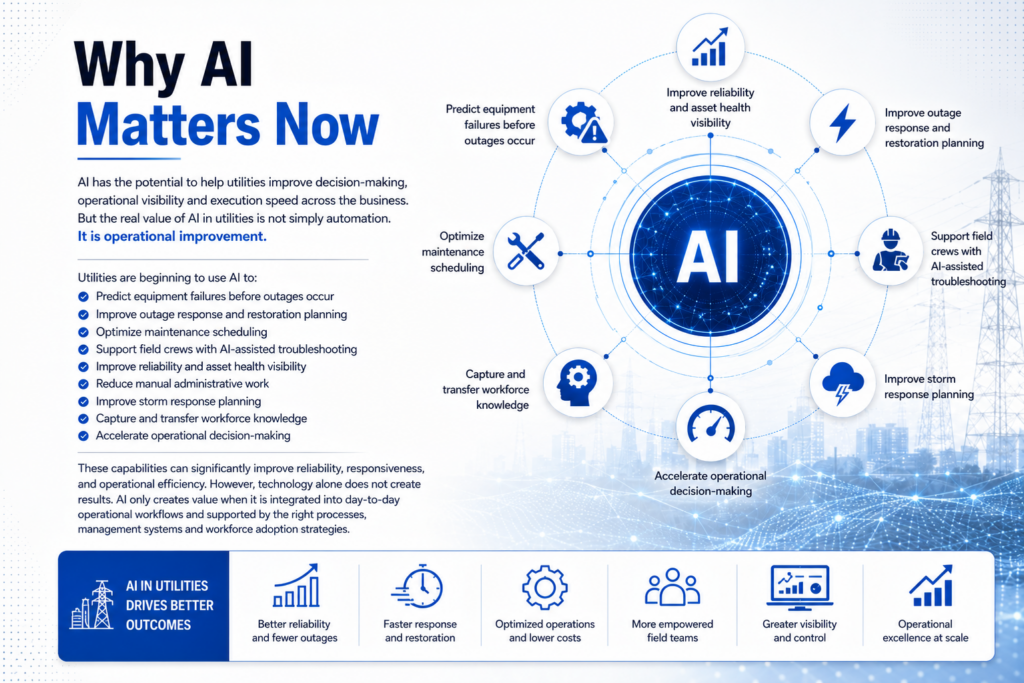
AI has the potential to help utilities improve decision-making operational visibility and execution speed across the business. But the real value of AI in utilities is not simply automation. It is operational improvement.
Utilities are beginning to use AI to predict equipment failures before outages occur improve outage response and restoration planning optimize maintenance scheduling support field crews with AI-assisted troubleshooting improve reliability and asset health visibility reduce manual administrative work improve storm response planning capture and transfer workforce knowledge and accelerate operational decision-making.
These capabilities can significantly improve reliability responsiveness and operational efficiency. However technology alone does not create results. AI only creates value when it is integrated into day-to-day operational workflows and supported by the right processes management systems and workforce adoption strategies.
The Shift from AI Strategy to AI Implementation
Many utilities have already started exploring AI. Some organizations have launched pilots or small-scale initiatives but struggle to scale them operationally. Others are investing in AI platforms without a clear implementation roadmap across operations.
This is where many initiatives stall. Utilities often underestimate the operational work required to successfully implement AI including standardizing workflows improving data quality integrating systems training frontline teams updating management operating systems establishing governance structures and embedding new operating routines.
Without these foundational elements AI often remains disconnected from day-to-day operations. The utilities industry does not have a shortage of AI technology. It has an implementation challenge.
AI Implementation Across Utility Operations
The utilities seeing the greatest value from AI are focusing on operational execution not experimentation.
Asset Performance and Reliability
Utilities manage large networks of critical infrastructure assets that directly impact reliability and outage risk. AI is helping utilities move from reactive maintenance toward predictive and condition-based maintenance strategies through transformer failure prediction substation health monitoring reliability risk scoring AI-assisted work order prioritization and predictive maintenance for transmission and distribution assets. When integrated into maintenance workflows these capabilities can improve uptime reduce outages and optimize maintenance resources.
Field Workforce Productivity
Utilities are also facing significant workforce challenges driven by retirements and skilled labor shortages. AI can help improve field execution through mobile AI assistants voice-enabled field reporting AI-assisted troubleshooting intelligent search across maintenance history and procedures and automated documentation support. The goal is not to replace field crews. The goal is to help them execute faster reduce administrative burden and improve consistency across operations.
Digital Management Operating Systems
Many utilities are modernizing management operating systems to improve operational visibility and response speed. AI-enabled digital management systems can provide real-time outage visibility reliability dashboards asset health monitoring escalation management crew productivity tracking and AI-generated operational insights. These systems help utilities move from reactive management toward proactive operational control.
Storm Response and Grid Resilience
Extreme weather events are becoming a major operational challenge across the utilities industry. AI can support predictive outage modeling crew staging optimization storm response planning infrastructure vulnerability analysis and wildfire risk analytics. As resilience pressures increase utilities need faster and more data-driven operational response capabilities.
Why Operational Execution Will Determine AI Success
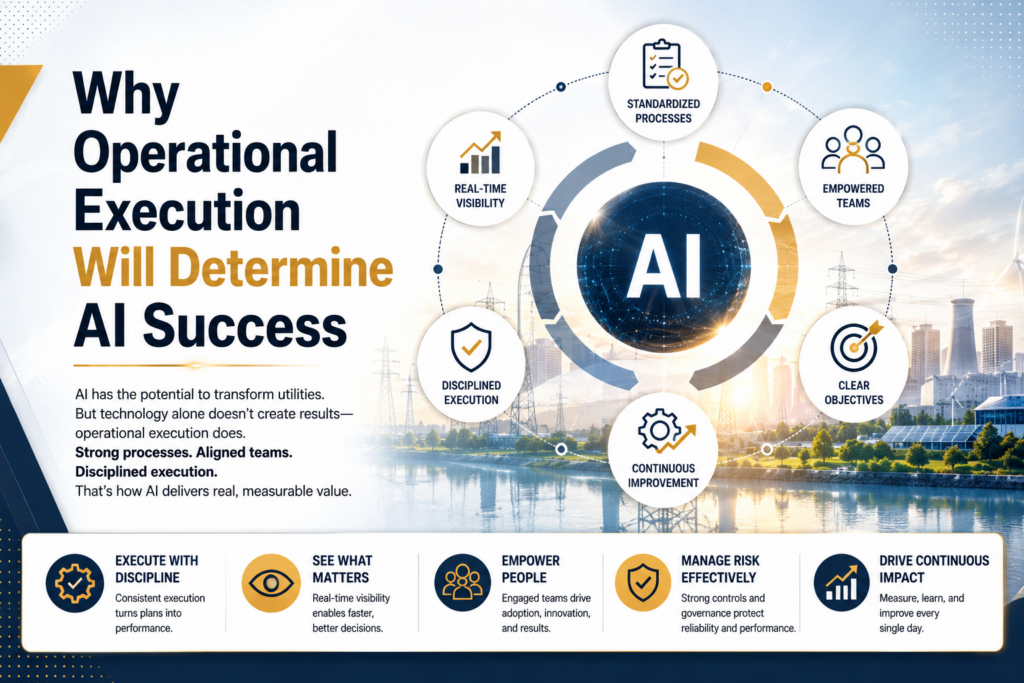
Utilities are entering a period where operational agility will become increasingly important. Organizations that successfully implement AI into operations will be better positioned to improve grid reliability respond faster to outages increase workforce productivity reduce operational risk support growing electricity demand and execute modernization initiatives more effectively.
But AI implementation is not just a technology initiative. It requires alignment across people process technology data and operational management systems. This is why many utilities are shifting focus away from disconnected AI pilots and toward operational implementation strategies that improve execution across the business. This shift will shape how AI in utilities delivers measurable enduring results.
The Future of Utility Operations
The utilities industry is being reshaped by grid modernization AI-driven electricity demand growth infrastructure investment and increasing operational complexity. As the utilities sector transformation accelerates operators will need tighter integration between systems data and frontline work.
AI will play an important role in helping utilities adapt to these changes. But the organizations that create the most value will not necessarily be the ones deploying the most AI tools. They will be the ones that successfully integrate AI into operational workflows field execution and day-to-day decision-making.
The future of utility operations will depend not only on technology adoption but on the ability to implement new ways of working that improve operational execution at scale.
FAQs
What changed to make AI implementation critical for U.S. utilities now?
Utilities face rising electricity demand from AI data centers aging infrastructure extreme weather labor shortages and modernization needs. AI helps manage this complexity and improve execution across reliability maintenance outage response and workforce productivity.
Why do many utility AI initiatives stall and what foundations are required to scale?
Initiatives stall because utilities underestimate the operational work needed. Success requires standardized workflows better data quality integrated systems frontline training updated management operating systems clear governance and new operating routines.
What kinds of operational improvements can AI deliver beyond automation?
AI improves decision-making and execution. Practical gains include predicting failures improving outage restoration optimizing maintenance schedules supporting field crews with troubleshooting enhancing reliability visibility reducing manual work improving storm planning and capturing workforce knowledge.
Where should utilities focus AI implementation across operations?
Focus on asset performance and reliability field workforce productivity digital management operating systems and storm response and grid resilience. Value comes when these are integrated into existing workflows.
What outcomes define AI success in utilities and what alignment is needed?
Success improves grid reliability speeds outage response boosts workforce productivity reduces risk supports growing demand and accelerates modernization. This requires alignment across people process technology data and operational management systems.