
Utilities across the United States are under increasing pressure to modernize operations while maintaining reliability controlling costs and responding to growing electricity demand. These pressures are unfolding alongside utilities trends that signal a broader utilities sector transformation.
The rise of AI data centers aging infrastructure workforce shortages and grid resilience concerns is forcing utilities to rethink how operations are managed and executed. This shift is accelerating ai in utilities as leaders pilot and deploy proven capabilities.
As a result artificial intelligence is becoming a growing priority across the utilities industry. But many utility leaders are asking an important question. Where is AI actually creating operational value?
Scanning utilities sector news reveals ai use cases in utilities that move beyond hype to real execution. The answer is becoming clearer. The most successful AI initiatives in utilities are not focused on experimentation alone. They are focused on improving operational execution across maintenance reliability field operations outage response and workforce productivity.
Here are some of the AI use cases already driving measurable value for utilities.
Predictive Maintenance for Critical Assets
One of the most impactful AI applications in utilities is predictive maintenance. Often framed as predictive maintenance for utilities this approach aligns maintenance resources with actual asset conditions and risk.
Utilities manage large networks of critical assets including transformers substations circuit breakers transmission equipment distribution infrastructure pumps and rotating equipment and generation assets.
Historically many maintenance activities have been reactive or based on fixed schedules. AI is helping utilities move toward more predictive and condition-based maintenance by analyzing sensor data SCADA data historical work orders asset performance trends environmental conditions and failure patterns.
This allows utilities to identify potential failures before they occur and prioritize maintenance activities based on risk and asset condition.
Benefits can include reduced unplanned outages improved asset reliability, lower maintenance costs extended asset life and better workforce utilization. For utilities facing growing reliability expectations predictive maintenance is becoming an increasingly important operational capability.
AI-Assisted Outage Response
Outage response remains one of the most operationally intensive areas of utility operations. Utilities are now using AI to improve outage prediction root cause analysis crew deployment restoration prioritization customer communications and storm response planning.
AI models can analyze historical outage patterns, weather conditions vegetation risks and grid performance data to help utilities identify high-risk areas before severe weather events occur.
During active outages AI can support faster operational decision-making by identifying probable failure points and recommending response priorities. This helps reduce restoration times while improving coordination across field operations teams.
AI for Field Workforce Productivity
Utilities are facing significant workforce challenges including skilled labor shortages, retirement-driven knowledge loss increasing operational complexity and growing administrative workload for field crews.
AI is increasingly being used to support field execution and improve technician productivity. Examples include AI copilots for technicians voice-enabled field reporting AI-assisted troubleshooting intelligent search across procedures and maintenance history automated documentation generation and mobile AI assistants for crews.
These tools help reduce time spent searching for information completing paperwork and navigating disconnected systems. The result is often faster execution, improved consistency and better knowledge transfer across the workforce.
Importantly the goal is not workforce replacement. The goal is helping crews work more effectively in increasingly complex operating environments.
Vegetation Management Optimization
Vegetation management is becoming a larger operational and reliability concern for utilities particularly in regions vulnerable to storms and wildfires.
AI can help improve vegetation management by analyzing satellite imagery drone inspections LiDAR data weather patterns growth projections and historical outage data.
This allows utilities to prioritize high-risk areas and optimize trimming schedules based on actual risk conditions instead of static maintenance cycles. Benefits may include reduced outage risk, improved wildfire mitigation better resource allocation and more targeted maintenance planning.
As grid resilience becomes a larger priority AI-driven vegetation management is gaining traction across the industry.
AI-Enabled Grid Reliability and Asset Health Monitoring
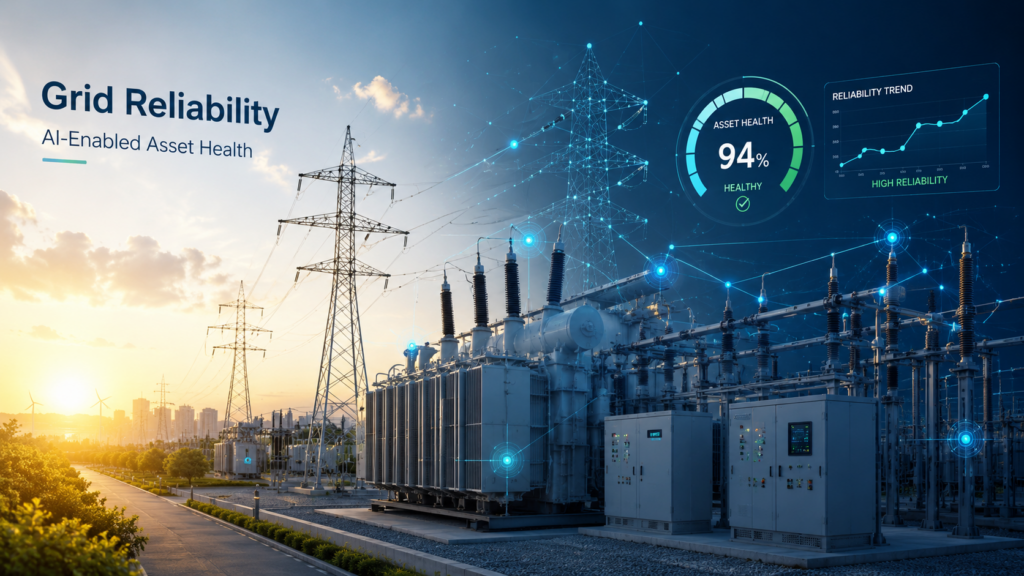
Utilities are also using AI to improve operational visibility across grid infrastructure. AI-enabled reliability systems can monitor asset health load conditions performance anomalies failure probabilities and reliability trends.
Rather than relying solely on lagging indicators utilities can use AI to identify emerging operational risks in real time. This helps organizations move from reactive operations toward proactive reliability management.
For utilities managing geographically dispersed infrastructure networks operational visibility is becoming increasingly important.
AI for Storm Response and Grid Resilience
Extreme weather events are creating major operational challenges across the utilities sector. AI is helping utilities improve resilience planning through predictive outage modeling infrastructure vulnerability analysis weather impact forecasting crew staging optimization emergency response planning and wildfire risk analytics.
By improving preparedness and response coordination utilities can reduce restoration times and improve operational resilience during major events. As weather-related disruptions increase resilience-focused AI capabilities are expected to become even more important.
AI for Work Management and Scheduling
Many utilities still rely on fragmented scheduling systems and manual planning processes. AI can improve operational scheduling by helping utilities optimize crew assignments prioritize work orders, balance workloads, improve route planning reduce travel time and coordinate outage schedules.
This can improve workforce productivity while reducing operational inefficiencies. In large field organizations even small productivity improvements can create significant operational and financial impact.
AI-Powered Customer Operations
Utilities are also beginning to apply AI to customer-facing operations. Examples include AI-assisted outage communications customer service copilots automated billing support intelligent call routing service request automation and AI-driven customer insights.
These capabilities can improve response speed while reducing administrative workload across customer operations teams.
Why Many Utility AI Initiatives Still Struggle
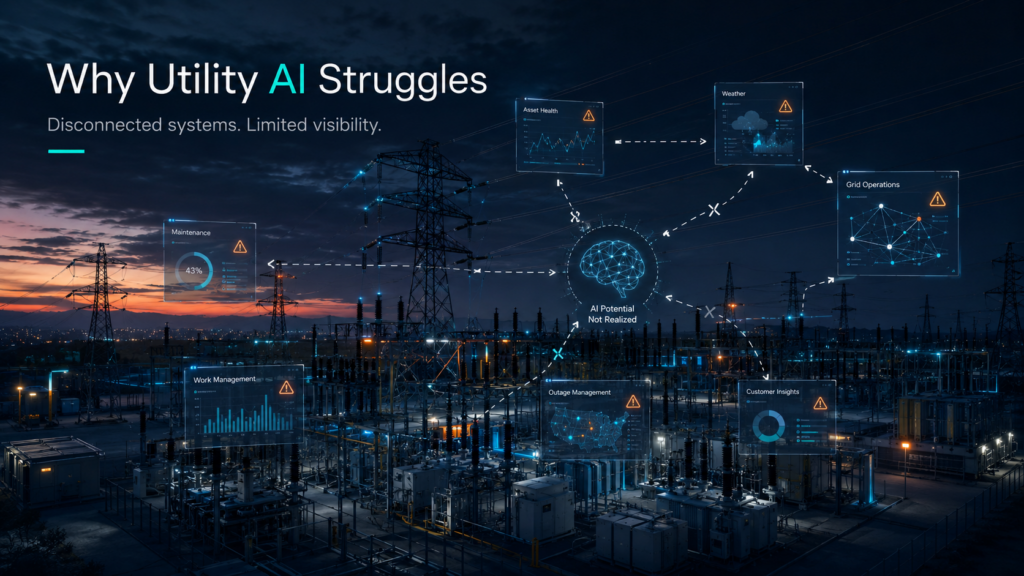
Despite growing interest in AI many utilities still struggle to scale AI initiatives across operations. The challenge is rarely the technology itself. More often the challenge is implementation.
Successful AI adoption requires utilities to address process standardization data quality system integration workforce training governance structures operational workflows and management operating systems.
Without these foundational elements AI often remains disconnected from day-to-day operations. The utilities industry does not need more disconnected AI pilots. It needs operational implementation strategies that embed AI into the way work is executed.
The Future of AI in Utilities
AI adoption across utilities is still in the early stages but the direction is clear. Utilities are increasingly using AI to improve reliability, increase workforce productivity reduce operational risk, modernize maintenance practices improve resilience and support grid modernization.
The organizations creating the most value are not simply deploying AI tools. They are integrating AI into operational systems workflows and frontline execution.
As operational complexity continues to increase across the utilities sector AI implementation will become less about experimentation and more about operational necessity.
FAQs
Where is AI actually creating operational value for utilities?
The biggest gains are coming from embedding AI directly into day-to-day operations. High-impact use cases include predictive maintenance outage response field workforce productivity vegetation management grid reliability monitoring storm response work management and customer operations.
How does predictive maintenance for critical assets work and what benefits does it deliver?
Predictive maintenance analyzes sensor and SCADA data historical work orders performance trends environmental conditions and failure patterns to flag emerging issues and prioritize work by risk and asset condition. Benefits include fewer unplanned outages, higher reliability, lower maintenance costs longer asset life and better use of workforce resources.
In what ways is AI speeding outage response and improving resilience during storms?
Before events AI models use historical outages, weather vegetation risk and grid performance to predict high-risk areas and guide crew staging and response planning. During outages AI assists with root cause identification crew deployment restoration prioritization and customer communications. The result is faster restoration and better coordination.
How is AI improving field workforce productivity without replacing jobs?
AI tools act as copilots supporting technicians with voice-enabled reporting AI-assisted troubleshooting, intelligent search automated documentation and mobile assistants. These reduce time spent on admin and information hunting speed execution improve consistency and help transfer knowledge as experienced workers retire.
Why do many utility AI initiatives struggle to scale and what’s needed to succeed?
The bottleneck is implementation not technology. Scaling requires strong foundations such as standardized processes, high-quality data robust system integration workforce training clear governance aligned operational workflows and effective management operating systems. Without these AI remains a disconnected pilot rather than an embedded capability that changes how work gets done.