
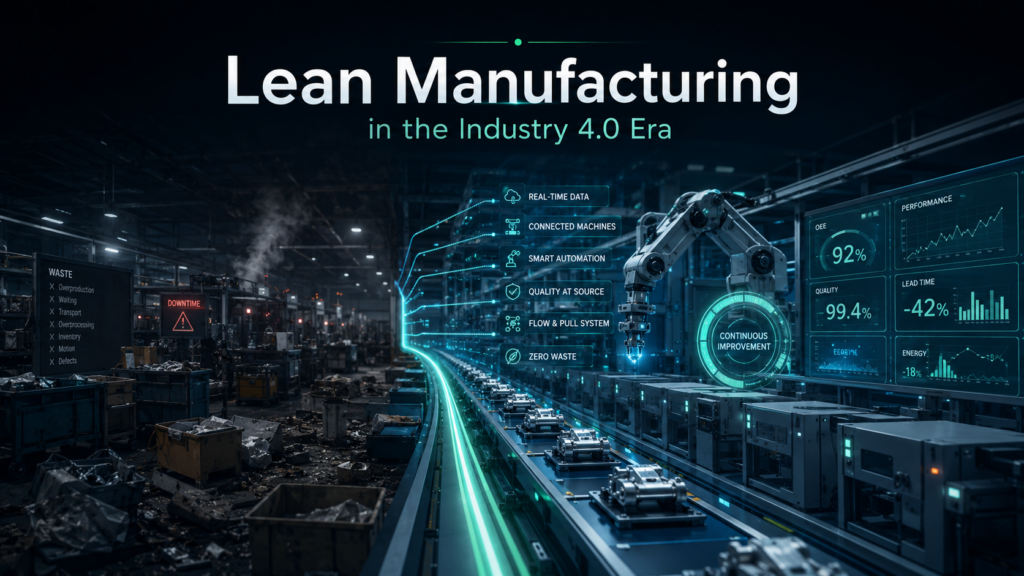
Lean manufacturing has been a foundation of industrial operations for decades. Across Europe manufacturers have long relied on lean principles to reduce waste, improve productivity stabilise operations and strengthen operational performance. Concepts such as standard work visual management root cause problem solving continuous improvement and flow optimisation remain highly relevant across modern manufacturing environments.
However manufacturing operations are becoming significantly more complex. Rising energy costs labour shortages, supply chain instability, increasing customer expectations and pressure to modernise operations are forcing manufacturers to rethink how lean manufacturing is applied within today’s industrial environment.
At the same time Industry 4.0 technologies including AI connected systems real-time operational visibility and digital manufacturing platforms are reshaping how factories operate. As a result lean manufacturing is evolving. The core principles remain the same. But the tools visibility and operational capabilities supporting lean execution are changing rapidly.
Lean Manufacturing Still Starts With Operational Discipline
Despite the rapid growth of Industry 4.0 technologies the foundations of lean manufacturing have not changed. Manufacturers still require stable processes, standardized operating procedures, reliable equipment effective production planning clear operational accountability cross-functional coordination and continuous improvement discipline.
Without these fundamentals digital technologies and AI often struggle to deliver sustainable value. Many organisations discover that introducing advanced technology into unstable operations simply exposes existing process problems more quickly. Poor process discipline inconsistent operating practices and disconnected workflows frequently reduce the effectiveness of digital initiatives.
Technology does not replace operational discipline. It amplifies it.
Industry 4.0 Is Changing Operational Visibility
One of the biggest shifts taking place within modern manufacturing is the availability of real-time operational data. Traditionally many lean manufacturing activities relied heavily on manual reporting physical boards spreadsheets and delayed performance visibility. While these methods can still be effective Industry 4.0 technologies now allow manufacturers to monitor operations in real time across production maintenance quality and supply chain functions.
This includes:
- Real-time production performance monitoring
- Connected equipment and asset visibility
- Automated KPI reporting
- Digital visual management systems
- Real-time downtime tracking
- Live maintenance and reliability data
- Production flow visibility
- Automated escalation of operational issues
This level of visibility allows operational teams to identify problems faster respond more consistently and improve decision-making throughout the plant. For many manufacturers digital visibility is becoming a critical enabler of modern lean manufacturing.
AI Is Expanding the Role of Lean Manufacturing
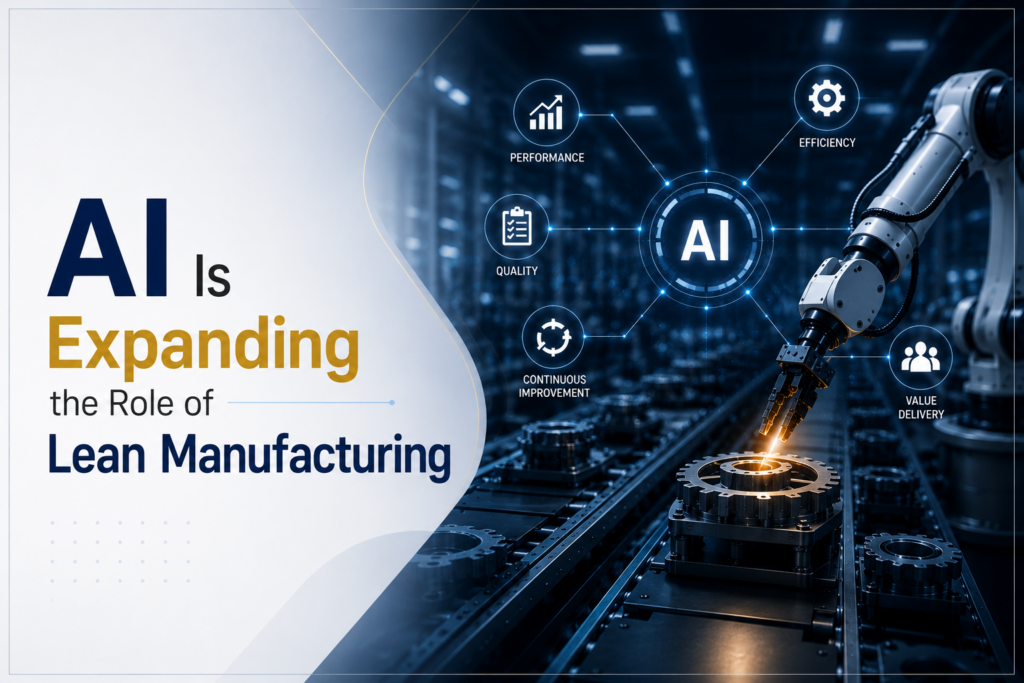
AI is also beginning to play a larger role within industrial operations. However the most effective applications of AI in manufacturing are typically those tied directly to operational execution rather than isolated technology pilots.
In manufacturing environments AI is increasingly being used to support predictive maintenance and reliability improvement production scheduling optimisation quality analytics and defect detection operational anomaly identification inventory and warehouse optimisation demand and supply planning operator support and digital workflows and root cause analysis and operational insights.
These capabilities allow manufacturers to identify inefficiencies and operational risks more quickly than traditional manual processes alone. For example predictive maintenance technologies can identify abnormal operating conditions before equipment failure occurs reducing unplanned downtime and improving operational stability. AI-assisted scheduling tools can help manufacturers improve production flow while reducing bottlenecks and unnecessary operational disruption.
In this sense AI is not replacing lean manufacturing principles. It is strengthening the ability to execute them consistently and at a greater scale.
Lean Manufacturing Is Becoming More Connected
Traditional lean manufacturing initiatives often operated within individual departments or production areas. Industry 4.0 is driving a more connected operational environment where production maintenance quality engineering and supply chain teams are increasingly integrated through shared operational data and digital workflows.
This is changing how manufacturers manage production flow maintenance planning inventory movement operational decision-making escalation management and performance accountability.
Digital Management Operating Systems (MOS) are becoming increasingly important within this environment because they help connect operational performance data visibility and management routines across the business. The objective is not simply collecting more information. It is improving operational responsiveness coordination and execution consistency across functions.
Why Many Industry 4.0 Initiatives Fail
While many manufacturers are investing heavily in Industry 4.0 technologies a significant number of initiatives struggle to deliver sustainable operational improvement. A common issue is that technology investments are implemented without sufficient focus on operational adoption and execution.
Manufacturers may invest in digital dashboards connected systems AI tools, smart factory technologies and automated reporting platforms but fail to address standardised operational processes management routines behavioural adoption cross-functional accountability operational ownership and training and capability development.
As a result many digital initiatives remain disconnected from day-to-day operations and fail to create lasting operational change. Technology alone does not improve operational performance. Sustainable improvement still depends on people processes and disciplined execution across the organisation.
The Future of Lean Manufacturing Is Digital and Operational
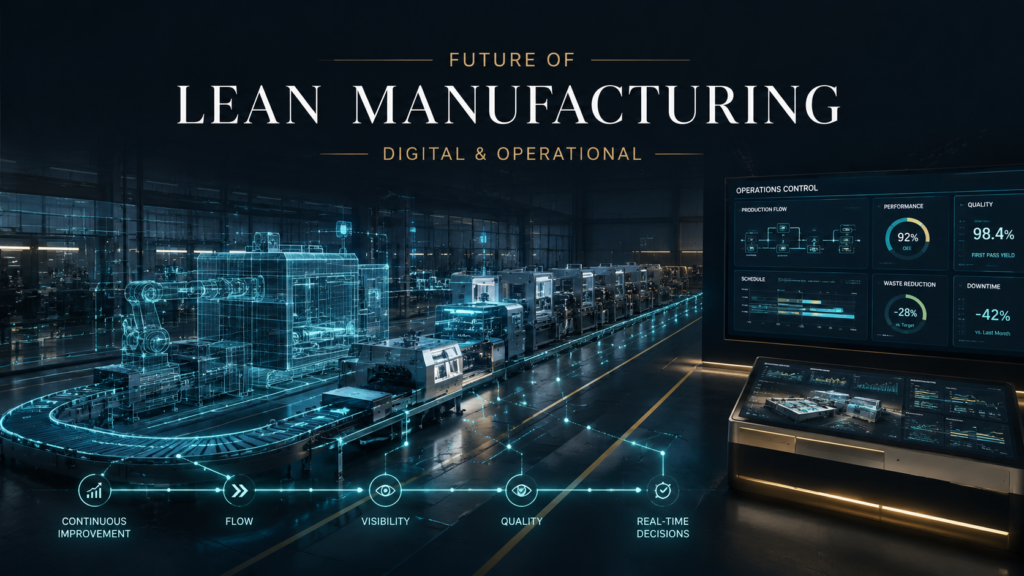
Lean manufacturing is not being replaced by Industry 4.0 or AI. It is evolving alongside them.
The manufacturers seeing the greatest results are typically those combining lean operational principles, strong operational discipline digital visibility reliable operational data, AI-enabled insights and structured implementation and execution.
Rather than viewing lean manufacturing and digital manufacturing as separate initiatives many organisations are beginning to integrate them as part of a broader operational excellence strategy. For European manufacturers operating within an increasingly competitive and high-cost environment this combination is becoming increasingly important.
Operational Excellence Still Sits at the Centre of Smart Manufacturing
Industry 4.0 technologies are creating significant opportunities across manufacturing operations. However the organisations achieving sustainable results are rarely those focused on technology alone.
They are the manufacturers capable of integrating digital capabilities into stable disciplined and well-executed operational environments. Lean manufacturing remains highly relevant because operational excellence still sits at the centre of manufacturing performance. The tools may be changing. The principles behind high-performing operations are not.
FAQs
Is lean manufacturing being replaced by Industry 4.0 and AI?
No. Lean is evolving alongside digital technologies. The core principles remain central. What is changing are the tools and visibility that support execution.
Why does lean still start with operational discipline even in a digital factory?
Because technology amplifies the underlying system. Stable processes, standardized procedures reliable equipment effective planning and continuous improvement are prerequisites for sustained value. Discipline first then digital.
What does real-time operational visibility look like in modern lean environments and why does it matter?
Industry 4.0 enables live connected views across production maintenance quality and supply chain. This lets teams spot issues sooner, respond more consistently and make better decisions making digital visibility a critical enabler of lean.
How is AI expanding the role and impact of lean?
AI strengthens lean execution by speeding insight and improving consistency. Common applications include predictive maintenance production scheduling optimisation quality analytics anomaly detection and operator support via digital workflows. AI helps teams apply lean principles more effectively.
Why do many Industry 4.0 initiatives fail to deliver sustained improvement and what should manufacturers do differently?
Failures often stem from focusing on technology without ensuring adoption and execution. Success requires standardised processes cross-functional accountability training and capability development. Connecting these through a digital Management Operating System helps align data performance management and daily routines.