
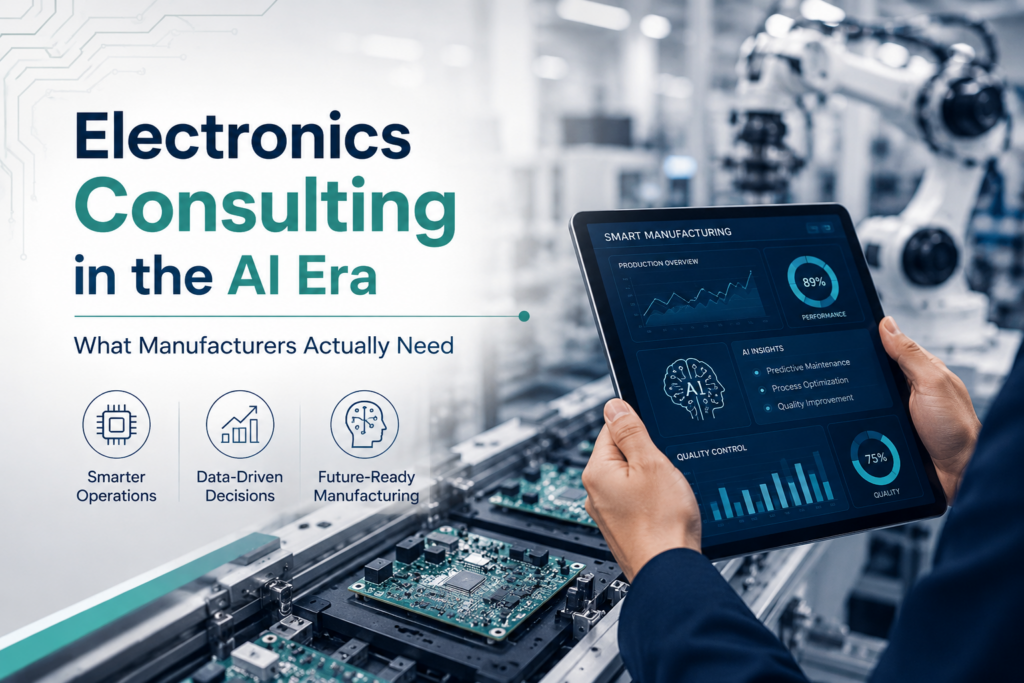
For years electronics manufacturers turned to consulting firms and electronics consultant expertise for strategy assessments and transformation roadmaps. Today the challenges facing the industry are different and so are the expectations.
Manufacturers are navigating rising product complexity accelerated product launches labor shortages, supply chain volatility increasing customer quality expectations and pressure to adopt AI and digital technologies faster than ever before.
The issue is not a lack of ideas. Most electronics manufacturers already know where opportunities exist. Many are now asking how to implement AI in electronics manufacturing without disrupting production or compliance.
The challenge is implementation.
That is why electronics consulting is changing. Manufacturers no longer need another slide deck explaining what AI could do. They need partners who can implement operational improvements, integrate AI into real workflows deliver electronic manufacturing solutions and drive measurable performance improvements across the factory and supply chain.
The Shift Happening in Electronics Manufacturing
Electronics manufacturing has become one of the most operationally complex industries in the industrial sector. Many organizations are managing high-mix low-volume production environments rapid engineering changes global supplier networks, strict traceability requirements increasing automation complexity pressure to improve throughput and yield simultaneously workforce knowledge gaps and fragmented production and quality data.
At the same time AI is rapidly entering the industry. Manufacturers are exploring AI-assisted quality inspection predictive maintenance AI production scheduling engineering document intelligence AI-enabled troubleshooting supply chain risk monitoring digital management operating systems and real-time operational visibility. These themes are especially prominent in consumer electronics consulting where product cycles and customer expectations move fastest.
But many organizations struggle to move beyond pilots.
Why Many AI Initiatives Stall
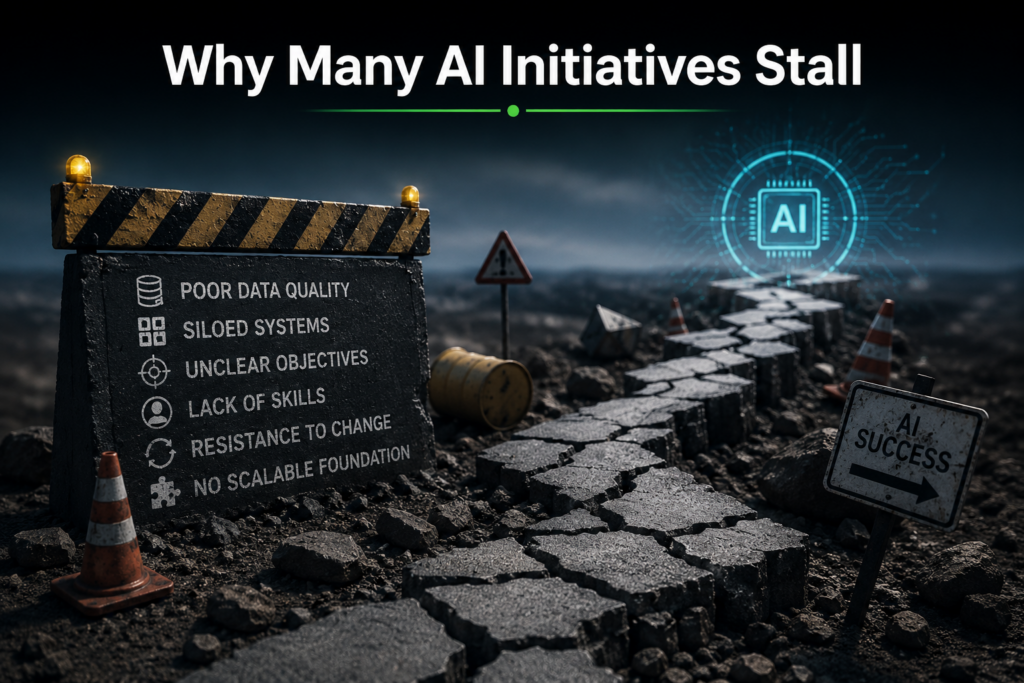
One of the biggest misconceptions in manufacturing today is that AI implementation is primarily a technology project. It is not.
Successful AI adoption in electronics manufacturing requires operational integration across people process data technology and leadership systems. Many manufacturers encounter challenges such as poor data consistency across systems disconnected MES ERP maintenance and quality platforms, lack of standardized operational processes limited workforce adoption no management system to sustain new workflows and AI tools that are not embedded into daily operations.
As a result companies launch pilots but fail to scale value across the enterprise. This is where the role of electronics consulting is evolving.
What Electronics Manufacturers Actually Need From Consulting Partners
The most valuable consulting partners today are not simply strategic advisors. They are implementation execution partners capable of driving operational change while integrating digital and AI capabilities into the business.
That means helping manufacturers align operational strategy with execution identify gaps across people process technology data and AI build implementation roadmaps tied to measurable business outcomes integrate AI into production maintenance engineering and supply chain workflows develop management operating systems that sustain results, train teams on new ways of working and scale improvements across plants and operations.
In other words manufacturers need implementation not just recommendations.
High-Impact AI Applications in Electronics Manufacturing
While AI adoption is still evolving several applications are already delivering measurable operational value in electronics manufacturing environments.
AI-Enabled Quality Inspection
AI vision systems can identify defects soldering issues, cosmetic abnormalities and assembly inconsistencies faster and more consistently than manual inspection alone. This helps improve first-pass yield scrap reduction rework reduction and quality response time.
Predictive Maintenance
AI models can analyze equipment data to identify failure patterns before downtime occurs. For electronics manufacturers this can help reduce unplanned downtime maintenance costs, production disruptions and spare parts inefficiencies.
AI Production Scheduling
AI-assisted scheduling tools can dynamically adjust production plans based on labor availability machine constraints material shortages and demand changes. This is especially valuable in high-mix electronics environments where schedules constantly shift.
Engineering and Knowledge Management
AI can help engineers and operators quickly access work instructions engineering changes troubleshooting guides historical quality issues and equipment documentation. This reduces time spent searching for information and accelerates problem resolution.
Supply Chain Visibility and Risk Detection
AI tools can monitor supplier risks, inventory trends logistics disruptions and demand variability in real time. This helps manufacturers respond faster to supply chain instability while improving inventory management and customer service.
AI Alone Does Not Create Value
One of the most important lessons emerging across manufacturing is that AI by itself rarely drives sustainable performance improvement. Technology only creates value when it changes the way operations are executed.
That requires standardized processes operational discipline leadership accountability, workforce adoption, digital visibility and continuous improvement systems. Without those foundations even the most advanced AI tools struggle to generate long-term impact.
The Future of Electronics Consulting
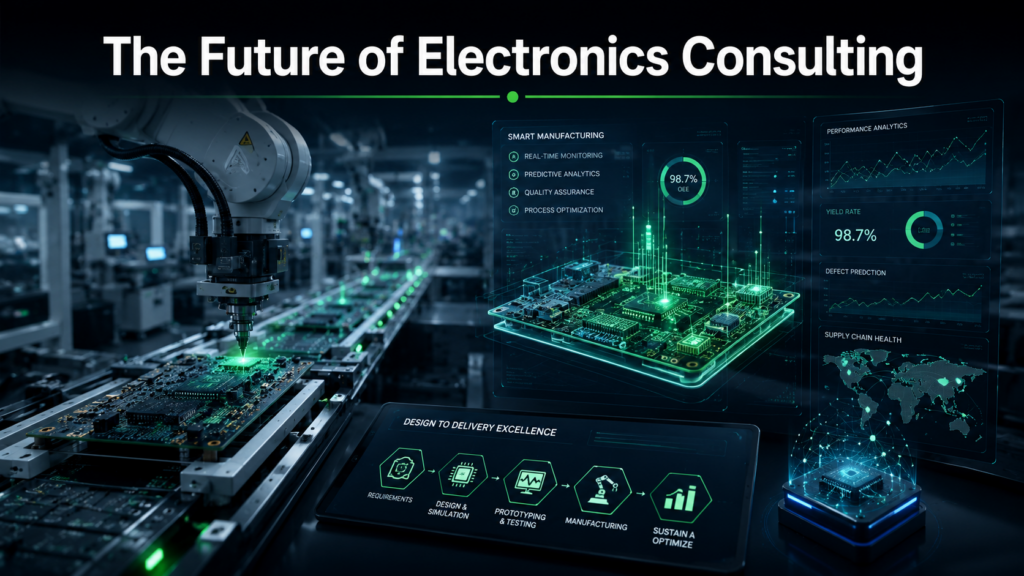
The future of electronics consulting will not be defined by who can create the best strategy presentation. It will be defined by who can execute.
Manufacturers increasingly need partners who understand both operational transformation and digital implementation. Organizations that can bridge operational excellence Industry 4.0 AI maintenance supply chain engineering and workforce enablement will be best positioned to help electronics manufacturers compete in the next era of industrial operations.
AI is rapidly reshaping electronics manufacturing but success will depend on more than technology adoption alone. The manufacturers that create lasting advantage will be the ones that successfully integrate AI into the way work actually gets done across the business.
FAQs
What’s actually changing about electronics consulting in the AI era?
The focus is shifting from strategy decks to hands-on execution. Manufacturers need partners who can implement operational improvements, integrate AI into real workflows and deliver measurable performance.
Why do many AI initiatives in electronics manufacturing stall?
Because they are treated as technology projects rather than operational changes. Success requires integrating people process data technology and leadership systems.
What do manufacturers actually need from consulting partners today?
Implementation partners who can align strategy with execution and drive change on the shop floor. This includes building roadmaps integrating AI into workflows establishing management operating systems and scaling improvements across plants.
Which AI applications are already delivering value in electronics manufacturing?
AI-enabled quality inspection predictive maintenance AI production scheduling engineering knowledge management and supply chain visibility are creating measurable gains in yield downtime costs and response time.
How can manufacturers ensure AI creates sustainable performance improvement?
By embedding AI into how work actually gets done and reinforcing it with operational rigor. Foundations include standardized processes operational discipline leadership accountability workforce adoption digital visibility and continuous improvement systems.