
Walk through almost any food manufacturing facility and you will hear a familiar phrase. We are too busy fixing equipment to improve it.
Walk through almost any food manufacturing facility and you will hear a familiar phrase. We are too busy fixing equipment to improve it. For many Asset Management Consulting maintenance has become a constant cycle of responding to breakdowns expediting parts, adjusting production schedules and working overtime to recover lost capacity.
The problem is not a lack of effort. Maintenance teams are often highly skilled and work tirelessly to keep production running.
find and equipment continues to age food manufacturers are recognizing that maintenance can no longer operate as a reactive support function. It must become a strategic capability.
That is where asset management consulting creates value.
Asset Management Is About More Than Equipment
Many organizations associate asset management with preventive maintenance programs or computerized maintenance management systems (CMMS). While both are important they represent only part of a much larger system.
An effective asset management program aligns maintenance processes reliability engineering materials management planning organizational capability and performance management to improve how manufacturing assets perform throughout their lifecycle.
The objective is not simply repairing equipment faster. The objective is improving production availability increasing Overall Equipment Effectiveness (OEE) reducing maintenance costs extending asset life and creating a more reliable manufacturing operation.
Leading food manufacturers recognize that equipment reliability is not a maintenance metric. It is a business performance metric.
Reactive Maintenance Creates Hidden Costs
When equipment fails unexpectedly the cost extends far beyond the repair itself. Production schedules change. Sanitation windows shift. Operators wait for equipment to become available. Quality issues increase during restarts. Maintenance priorities change. Emergency parts are ordered. Overtime becomes routine. Customer deliveries become more difficult to achieve.
These costs rarely appear on a maintenance report but they have a direct impact on manufacturing performance and profitability. The longer organizations remain reactive the more difficult it becomes to break the cycle.
Reliability Begins Long Before Equipment Fails
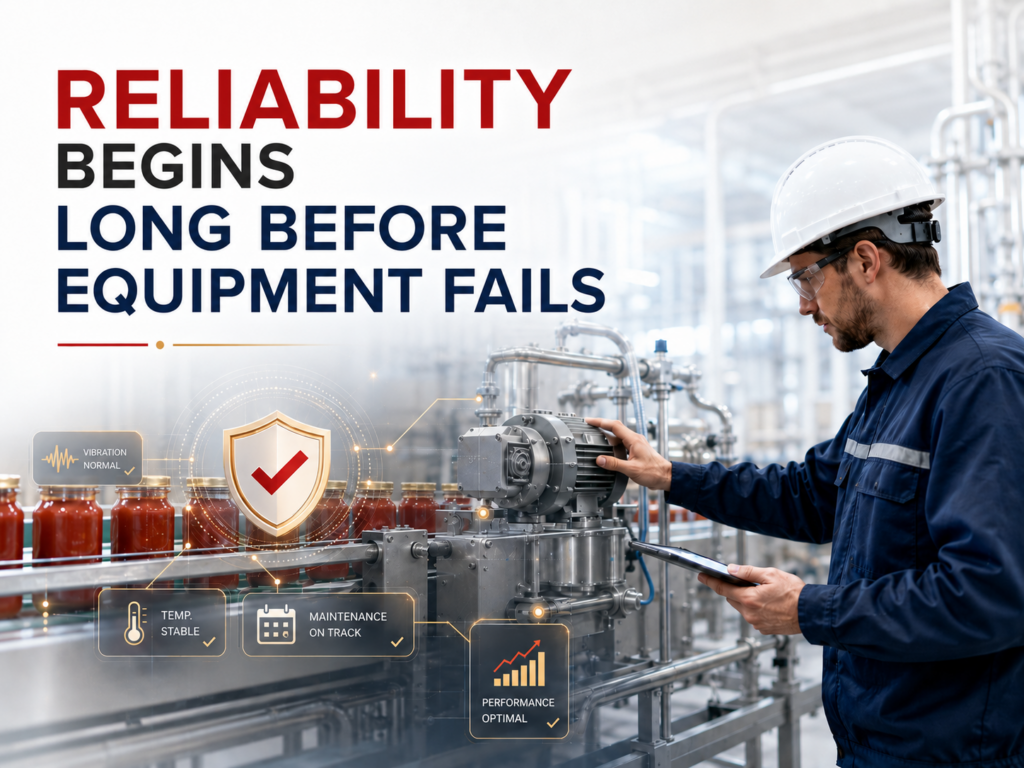
One of the biggest shifts in modern asset management is moving from repairing failures to preventing them. Rather than asking how quickly can we respond leading manufacturers ask:
- Which assets are most critical to production?
- What failure modes create the greatest operational risk?
- How can maintenance work be planned rather than expedited?
- Are recurring failures being permanently eliminated?
- Is the maintenance strategy aligned with how equipment is actually operated?
Answering these questions requires more than preventive maintenance. It requires reliability engineering.
Modern asset management programs often include equipment criticality assessments Reliability Centered Maintenance (RCM) Failure Mode and Effects Analysis (FMEA) Root Cause Analysis (RCA) condition monitoring and operator-driven reliability. Together these practices help organizations reduce unplanned downtime while improving production stability and maintenance efficiency. An equipment criticality assessment also clarifies priorities for maintenance planning and scheduling so teams focus on the highest operational risks first.
A CMMS Alone Doesn’t Improve Reliability
Many food manufacturing consultant invest heavily in CMMS platforms.. Yet many fail to achieve the expected return. The reason is simple. Software does not create maintenance excellence. Processes do.
A CMMS becomes valuable when it supports disciplined maintenance work management including maintenance planning and scheduling:
- Work identification
- Prioritization
- Planning
- Scheduling
- Work execution
- Work closeout
- Accurate master data
- Meaningful performance reporting
Leading food industry consultant recognize that implementing a CMMS is only the beginning. The greatest return comes from pairing technology with standardized maintenance processes maintenance planning and scheduling discipline, accurate master data organizational adoption and continuous performance improvement. A CMMS should enable better maintenance. It cannot create it on its own.
Asset Management Requires an Operating System
One of the most overlooked aspects of maintenance transformation is leadership. Reliable equipment does not happen because better procedures exist. It happens because organizations consistently execute them.
High-performing maintenance organizations establish structured management operating systems that create accountability and visibility at every level. These systems include standard maintenance KPIs tiered performance meetings visual management leader standard work structured planning routines and clear roles and responsibilities.
The objective is not more meetings. The objective is faster decision-making greater accountability and sustained performance improvement. The most successful maintenance transformations extend well beyond maintenance practices. They strengthen organizational effectiveness leadership routines performance management and change management because sustainable reliability depends as much on people and execution as it does on technical expertise.
AI Is Accelerating the Evolution of Asset Management
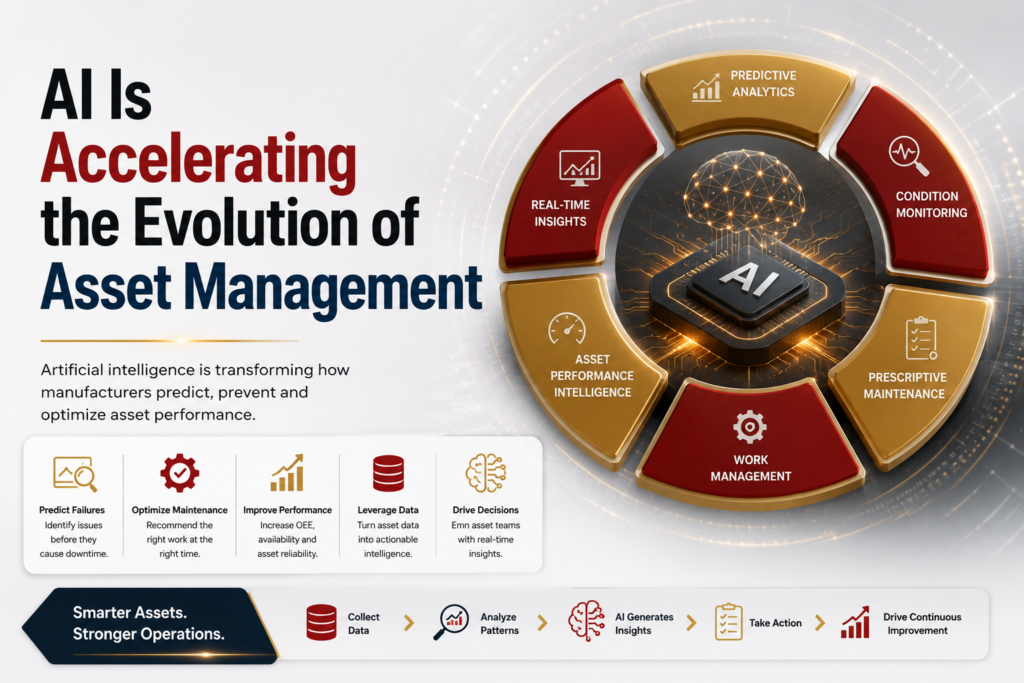
Artificial intelligence is creating new opportunities for maintenance organizations. Predictive maintenance can identify developing failures before production is affected and many teams are adopting AI for predictive maintenance in manufacturing to scale these insights.
AI copilots can help technicians troubleshoot equipment by instantly searching maintenance history OEM documentation previous work orders technical procedures and equipment manuals. Digital work instructions can guide technicians through complex maintenance activities while adapting instructions based on equipment condition surfacing lessons learned from previous repairs and ensuring work is performed consistently across shifts.
AI can also support maintenance planning by identifying recurring failure patterns recommending preventive actions helping prioritize work based on operational risk and capturing valuable maintenance knowledge that would otherwise leave the organization as experienced employees retire.
Rather than replacing maintenance professionals AI helps them make faster better-informed decisions while preserving organizational knowledge and improving maintenance execution. Organizations with standardized maintenance processes reliable operational data and disciplined work management will realize far greater value from AI than organizations attempting to automate reactive maintenance. AI amplifies operational excellence. It does not replace it.
What to Look for in an Asset Management Consulting Partner
Successful Asset Management Consulting goes far beyond maintenance assessments. An effective partner should help manufacturers strengthen the entire reliability system including:
- Maintenance work management
- Reliability engineering
- CMMS optimization
- MRO inventory management
- Organizational effectiveness
- Management operating systems
- Performance measurement
- Change management
- AI readiness and digital transformation
The goal is not simply reducing maintenance costs. It is creating a manufacturing operation where equipment consistently supports production quality customer service and long-term growth.
Final Thoughts
For food consulting equipment reliability has become a competitive advantage. Organizations that continue relying on reactive maintenance often experience higher operating costs lower production availability and greater disruption as demand increases.
Those that invest in structured asset management create a different outcome. Maintenance becomes planned rather than reactive. Equipment becomes more reliable. Production becomes more predictable. Costs decline. And the business gains the operational stability needed to support continuous improvement digital transformation predictive maintenance AI copilots and digital work instructions.
Asset management is no longer simply about maintaining equipment. It is about building a manufacturing operation that consistently meets production targets improves OEE reduces operating costs strengthens customer service and creates the operational foundation for future technologies.
The organizations that recognize this shift will be better positioned to compete in an increasingly demanding food manufacturing consulting services environment.
FAQs
Why is reactive maintenance a problem in food manufacturing?
Reactive maintenance creates a cycle of firefighting that caps operational performance and inflates hidden costs. Unplanned failures trigger schedule changes quality issues overtime and delivery problems. These costs rarely appear on maintenance reports but they directly erode availability OEE and profitability.
How is effective asset management different from just doing PMs or installing a CMMS?
Modern asset management is a full system not a tool or task list. It aligns maintenance reliability materials planning organizational capability and performance management to improve asset performance across the lifecycle. A CMMS becomes valuable only when it supports disciplined work management with accurate data and meaningful reporting.
What is a maintenance management operating system and why does it matter?
It is the leadership and execution framework that makes reliability stick. It includes standard KPIs tiered meetings visual management leader standard work and clear roles. The objective is faster decisions greater accountability and sustained improvement.
How can AI accelerate asset management and what must be in place to get value?
AI enhances maintenance with predictive maintenance copilots and digital work instructions. It helps spot failures capture knowledge and guide technicians. Organizations with standardized processes reliable data and disciplined work management gain far more value. AI amplifies operational excellence. It does not replace it.
What should we look for in an asset management consulting partner?
Choose a partner who strengthens the whole reliability system including maintenance work management reliability engineering CMMS optimization MRO inventory organizational effectiveness management operating systems performance measurement change management and AI readiness. Focus on measurable results not just recommendations.