
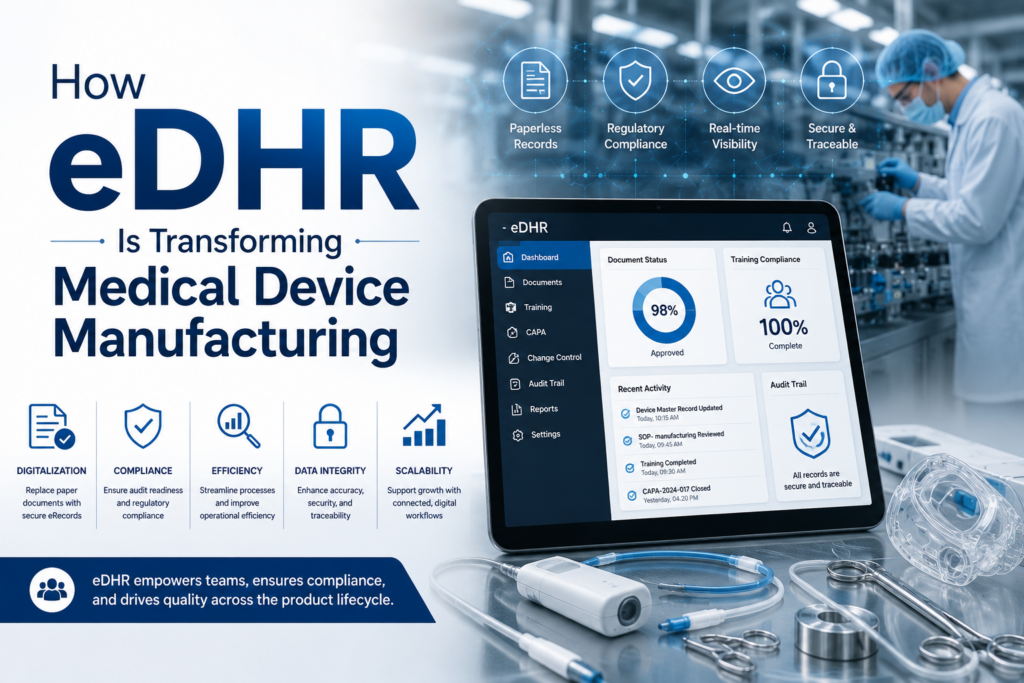
More Than Compliance: Why Electronic Device History Records Are Becoming a Competitive Advantage
Medical Device Manufacturing operates in one of the world’s most highly regulated industries. Every product requires extensive documentation to demonstrate that it was manufactured according to approved procedures and meets quality and regulatory requirements.
For decades many organizations relied on paper-based Device History Records (DHRs). While these systems satisfied regulatory requirements they also introduced significant operational challenges. These included manual data entry documentation errors lengthy review cycles delayed product releases and administrative work that added cost without improving manufacturing performance.
Today electronic Device History Records (eDHR) often abbreviated as edhr are changing that equation.
Forward-looking manufacturers are implementing eDHR solutions not simply to digitize paperwork but to improve manufacturing efficiency strengthen quality reduce costs and accelerate product release. These improvements are becoming essential across Medical Device Manufacturing operations.
What Is an eDHR?
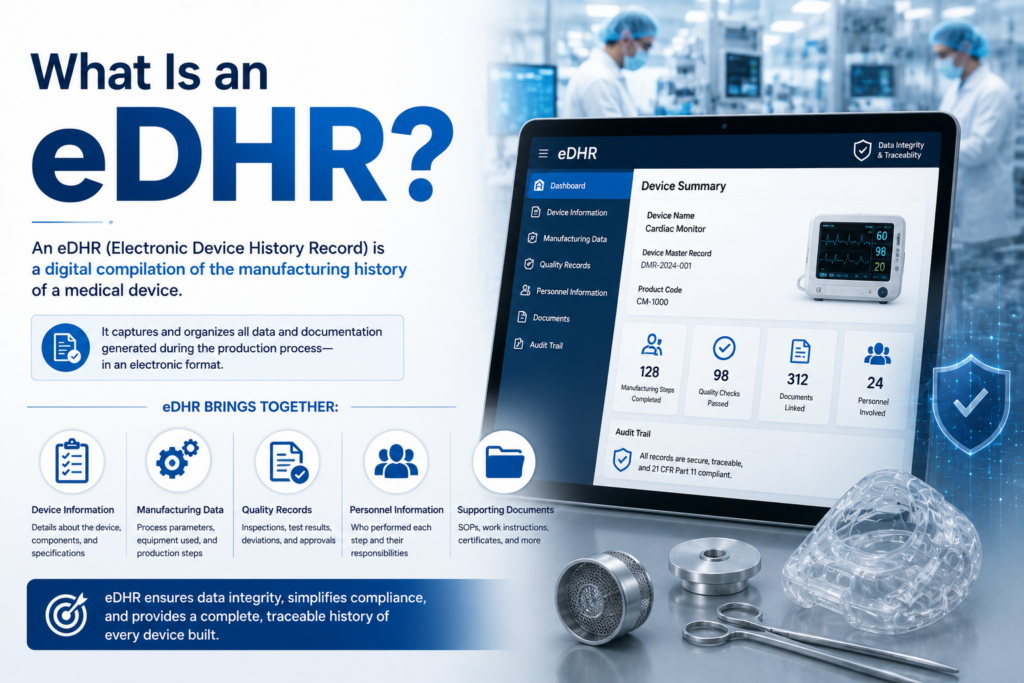
An electronic Device History Record (eDHR) is the digital version of the documentation required to demonstrate that a medical device was manufactured according to approved specifications procedures and quality requirements. Put simply an electronic device history record consolidates the required manufacturing documentation in a secure digital format.
An effective eDHR system captures manufacturing data directly from production processes equipment operators and connected devices creating a complete digital record throughout the manufacturing process.
Rather than relying on manual paperwork completed after production information is captured as work is performed improving both accuracy and visibility.
The Challenges of Paper-Based Device History Records
Many medical device manufacturers still manage portions of their production documentation manually. While these systems often satisfy compliance requirements they frequently create operational inefficiencies that affect manufacturing performance.
Common challenges include:
- Hundreds of manual data entries for every production build
- Multiple documentation reviews before product release
- Documentation errors requiring correction and rework
- Delays caused by incomplete or missing information
- Paper storage and document retrieval costs
- Administrative work that limits operator productivity
- Limited visibility into production status
As production volumes increase these inefficiencies become increasingly difficult to manage.
How eDHR Improves Manufacturing Performance
The most successful eDHR implementations go well beyond replacing paper with digital forms. They integrate quality documentation directly into manufacturing operations.
Automated Data Capture
Connected production equipment can automatically capture measurements process parameters and inspection results. This reduces manual data entry while improving data accuracy and consistency.
Standardized Digital Workflows
Operators follow standardized electronic work instructions and process steps throughout production. Required information is captured in the correct sequence reducing variability while improving compliance.
Error Prevention
Digital workflows can identify missing information incorrect entries or process deviations before products move to the next operation. Instead of discovering documentation problems during final review issues can be corrected immediately.
Faster Product Release
Because documentation is completed and validated throughout production quality teams spend less time reviewing paper records after manufacturing is complete. This can significantly reduce release cycle times while maintaining regulatory compliance.
Improved Traceability
Every manufacturing step operator action equipment measurement and quality verification is captured electronically creating complete product traceability throughout the manufacturing process.
Beyond Compliance: The Business Benefits
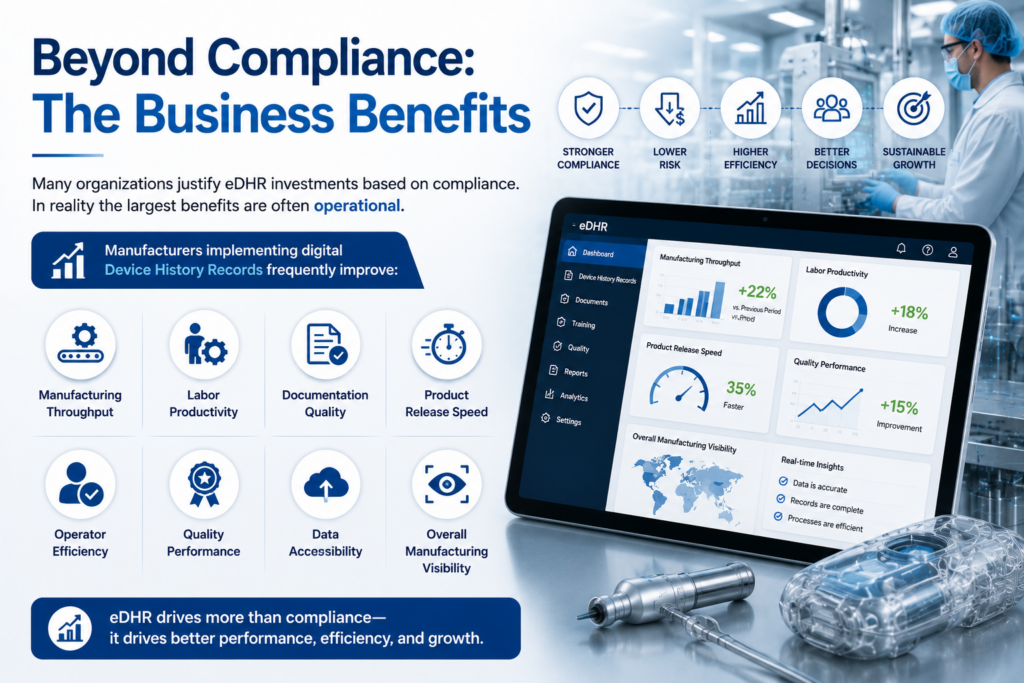
Many organizations justify eDHR investments based on compliance. In reality the largest benefits are often operational.
Manufacturers implementing digital Device History Records frequently improve:
- Manufacturing throughput
- Labor productivity
- Documentation quality
- Product release speed
- Operator efficiency
- Quality performance
- Data accessibility
- Overall manufacturing visibility
Digital documentation also creates the structured data foundation required for advanced analytics AI applications and continuous improvement initiatives. Many organizations also invest in medical device manufacturing software to maximize the value of eDHR data.
A Real-World Example
Implementation Engineers recently supported a leading medical device manufacturer producing trauma plates in a highly regulated manufacturing environment.
The organization relied on paper-based Device History Records consisting of approximately 50-60 pages per unit and 400-500 manual documentation entries. Records were reviewed multiple times before product release creating delays administrative effort and opportunities for documentation errors.
The solution embedded electronic Device History Records directly into production workflows.
Key improvements included:
- Digital process-driven data capture
- Automated collection of measurements from connected equipment
- Electronic applications aligned to each manufacturing operation
- Elimination of redundant documentation reviews
- Digital workflows integrated into daily production execution
The results included:
- $12.4 million in annual cost savings
- 25% reduction in manual documentation
- Reduced documentation errors and rework
- Labor shifted from administrative work to production
- Elimination of paper storage and printing costs
The project demonstrated that eDHR can improve both compliance and operational performance when integrated into manufacturing execution rather than treated as a standalone documentation system.
eDHR Is a Foundation for AI and Digital Manufacturing
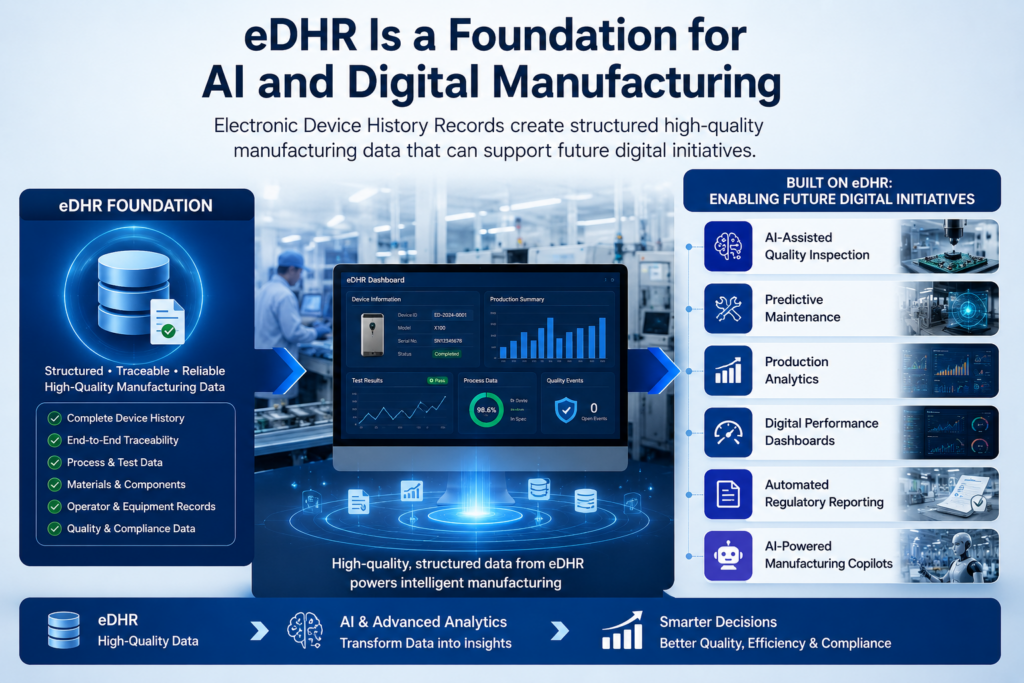
Electronic Device History Records create structured high-quality manufacturing data that can support future digital initiatives.
Organizations are increasingly building on eDHR investments by introducing:
- AI-assisted quality inspection
- Predictive maintenance
- Production analytics
- Digital performance dashboards
- Automated regulatory reporting
- AI-powered manufacturing copilots
Without reliable digital production data many of these technologies are difficult to deploy successfully. Modern medical device manufacturing solutions increasingly rely on this digital foundation to support continuous improvement.
Choosing the Right Implementation Approach
Implementing eDHR is more than a software project. Success depends on aligning technology with manufacturing processes operator workflows quality requirements and change management. Many organizations also engage life sciences consulting experts or a specialized life science consulting firm. Others partner with experienced medical device manufacturing consultants to guide process design integration validation and change management.
Organizations that achieve the greatest value typically focus on:
- Process standardization before digitization
- Operator adoption and training
- Integration with manufacturing systems
- Automated data collection
- Sustainable operating routines
- Continuous performance improvement
Final Thoughts
Electronic Device History Records are transforming Medical Device Manufacturing by doing much more than replacing paper. When implemented effectively eDHR enables manufacturers to reduce manual work improve quality accelerate product release strengthen compliance and create the digital foundation for AI-enabled manufacturing.
As medical device manufacturers continue investing in digital transformation eDHR is becoming a critical component of operational excellence not simply a compliance initiative. The growing medical device contract manufacturing industry is also adopting these digital capabilities to improve scalability and quality. Even organizations searching for medical device manufacturers near me increasingly evaluate suppliers based on their digital manufacturing capabilities and quality systems.
Q&A
What is an eDHR and how is it different from a paper DHR?
An electronic Device History Record (eDHR) is the secure digital version of manufacturing documentation. Unlike paper DHRs filled out after production, eDHR captures data directly from processes, equipment, and operators in real time for better accuracy and visibility.
What problems with paper-based DHRs does eDHR solve?
Paper DHRs need hundreds of manual entries, multiple reviews, and frequent corrections. They cause delays, extra costs, and low visibility. eDHR reduces errors, eliminates redundant work, and speeds up product release.
How does eDHR improve manufacturing performance and release speed?
eDHR integrates documentation into daily production with automated data capture and digital workflows. It catches issues immediately, reduces manual reviews, and shortens release cycles while maintaining full compliance and traceability.
What business outcomes can manufacturers expect?
Manufacturers typically see higher throughput, better productivity, fewer errors, faster releases, and improved visibility. In one trauma plate project, eDHR delivered $12.4 million in annual savings and a 25% reduction in manual documentation.
What does successful eDHR implementation require and how does it support AI?
Success requires strong processes, operator training, system integration, and change management. eDHR creates clean structured data that becomes the foundation for AI applications like predictive maintenance, quality inspection, and digital manufacturing.